Vintage 1911 Eads Bridge & St. Louis Riverfront Color Postcard
📸 Click any thumbnail to inspect Front, Back & Angles (2 Photos)
As an eBay Partner, we may earn a commission if you make a purchase.
Item Specifications
- Era: Divided Back (1907-1915)
- Year: 1911
- Publisher: S. H. Knox & Co.
- Location: St. Louis, Missouri
- Subject: Eads Bridge & Riverfront Steamboats
- Postmark Date: August 8, 1911
- Category: Postcards & Ephemera
- Format / Type: Vintage Postcards
Looking for Modern Alternatives?
Explore top-rated, modern Postcards & Ephemera and related historical accessories on Amazon.
Shop Postcards & Ephemera on Amazon →As an Amazon Associate, we earn from qualifying purchases.
Historical Context & Overview
A Gateway Marvel: The Iconic Eads Bridge and St. Louis Riverfront
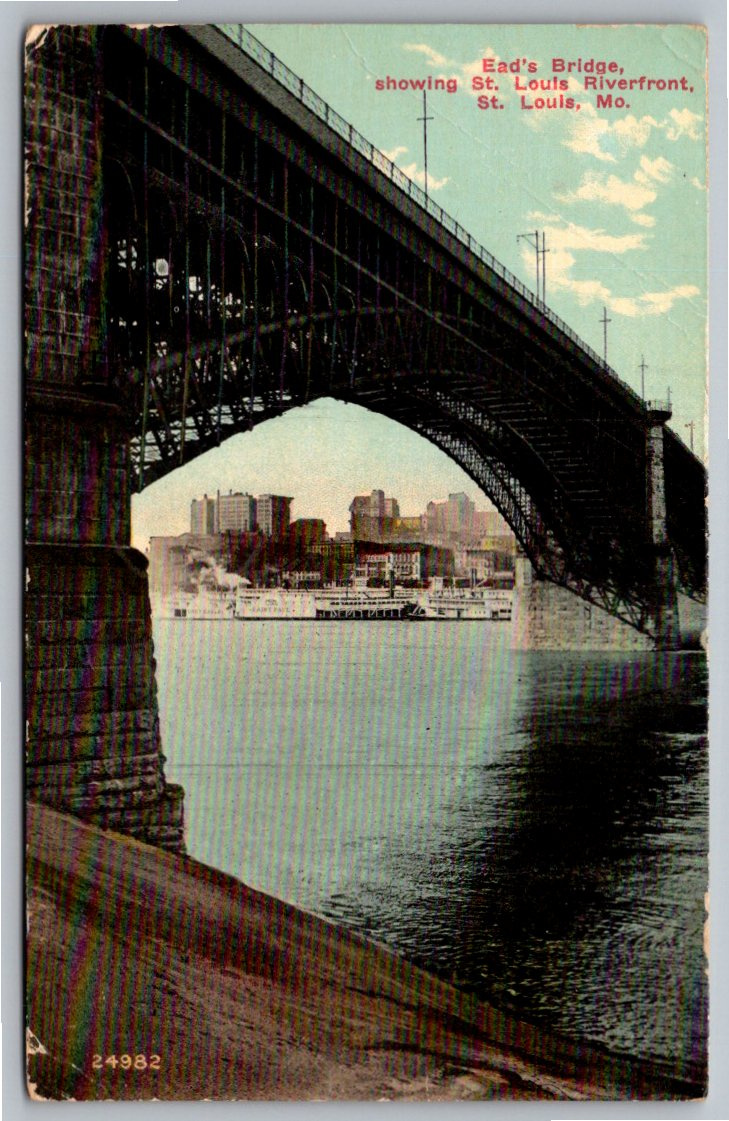
In the early twentieth century, few structures embodied the spirit of American industrial ingenuity quite like the Eads Bridge. Spanning the mighty Mississippi River to connect St. Louis, Missouri, with East St. Louis, Illinois, this towering steel-arch bridge redefined civil engineering across the globe. This vintage color postcard, postmarked in August 1911, captures a breathtaking perspective looking through the soaring metal structural vault of the bridge toward the bustling St. Louis shoreline, framed by classic riverboats resting along the levee.
Engineering the Impossible: James B. Eads and the Steel Arch
When self-taught engineer James Buchanan Eads proposed his revolutionary bridge design in the late 1860s, skeptics openly doubted whether such vast spans could withstand the immense currents and shifting sands of the Mississippi River. Unfazed by the critics, Eads pioneered the large-scale structural use of alloyed steel, securing three massive arch spans deep into riverbed bedrock using advanced pneumatic caissons. When the bridge officially opened to railway and wagon traffic on July 4, 1874, it stood as the longest arch bridge in the world, forever cementing St. Louis as the ultimate gateway to the American West.
Steamboats and the Pulse of the Mississippi
Framed dramatically beneath the river-spanning arch in this vivid postcard image are traditional Mississippi riverboats moored along the stone levee. While the rapid expansion of transcontinental rail networks gradually altered river logistics, steamboats remained vital symbols of Midwestern commerce, excursion travel, and regional trade well into the 1910s. The peaceful scene captured here illustrates a dynamic era of transition, where traditional paddlewheel vessels operated directly beneath the high-capacity steel rail lines above.
Postal History and Collector Significance
Published expressly for S. H. Knox & Co.—a major early five-and-ten-cent retailer that eventually merged into the famed F. W. Woolworth Company—this card stands as a prime example of golden-age American postcard production. The reverse side bears a crisp hand-cancelled postmark from the St. Louis main post office dated August 8, 1911, paired with a green one-cent Benjamin Franklin stamp. The handwritten message written by a traveler named Anna offers a charming window into daily turn-of-the-century communications. For regional collectors, structural engineering enthusiasts, and deltiologists alike, this original artifact captures a milestone moment in Midwestern history.