Vintage 1911 Aix-la-Chapelle Aachen Rathaus Tuck Oilette Postcard
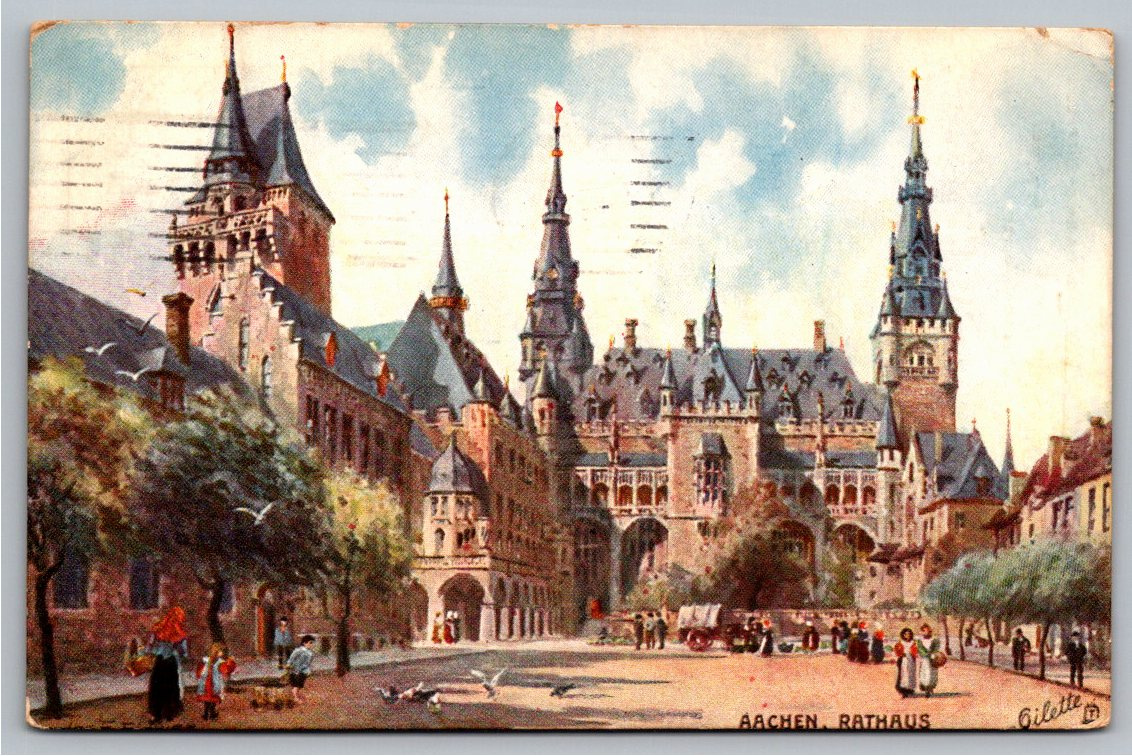
📸 Click any thumbnail to inspect Front, Back & Angles (2 Photos)
As an eBay Partner, we may earn a commission if you make a purchase.
Item Specifications
- Publisher: Raphael Tuck & Sons
- Series: Oilette Wide-Wide-World
- Year: 1911
- Location: Aachen, Germany
- Subject: Aachen Rathaus (Town Hall)
- Era: Divided Back (1907-1915)
- Category: Postcards & Ephemera
- Format / Type: Vintage Postcards
Looking for Modern Alternatives?
Explore top-rated, modern Postcards & Ephemera and related historical accessories on Amazon.
Shop Postcards & Ephemera on Amazon →As an Amazon Associate, we earn from qualifying purchases.
Historical Context & Overview
The Historic Grandeur of Aachen’s Rathaus
Standing in the heart of Aachen, Germany—historically known in French as Aix-la-Chapelle—the Aachen Rathaus (Town Hall) is one of Northern Europe’s most remarkable achievements in Gothic architecture. Constructed upon the 8th-century foundations of Charlemagne's imperial palace, the site has served as a central pillar of European governance and civic pride for over a millennium. This exquisite 1911 vintage postcard captures the imposing silhouette of the landmark during a pivotal era of post-restoration elegance.
The history of the structure itself is deeply layered. Following the collapse of the original Carolingian palace, the citizens of Aachen erected a Gothic town hall over the ruins between 1330 and 1350. Over the centuries, the hall endured repeated fires, notably a devastating blaze in 1888 that severely damaged the spires and roof. A massive historical restoration project culminated in 1902, fully revitalizing the facade and structural integrity just a decade before this postcard was produced and posted.
Raphael Tuck & Sons and the "Oilette" Tradition
Published by Raphael Tuck & Sons, fine art publishers to King Edward VII and Queen Alexandra, this card belongs to their celebrated "Oilette" series—specifically numbered within the "Wide-Wide-World" collection (Aix-la-Chapelle, Postcard 7312). Introduced at the turn of the 20th century, the Oilette printing process was designed to replicate the brushstrokes, rich textures, and luminous depth of an original oil painting.
The painterly illustration depicted here highlights the contrasting architectural towers, including the famous Granusturm on the left, while bringing the surrounding square to life with market figures, traditional attire, and soft, atmospheric lighting. Tuck's art postcards remain prized among deltiologists for their superior color saturation and artistic fidelity.
A Captivating Slice of 1911 Postal History
The reverse side of this postcard reveals a fascinating narrative of early 20th-century communication. Mailed on January 30, 1911, through the St. Louis, Missouri transit post office, it bears a crisp cancellation mark over a green 1-cent Benjamin Franklin postage stamp. The handwritten message, penned in flowing ink script, reflects a touching personal connection between family members during the Golden Age of Postcards.
For collectors of European architectural heritage, German history, or fine Tuck & Sons ephemera, this 1911 item stands as a tangible artifact bridging imperial European history with the golden era of international correspondence.