Vintage 1910 Kokomo Indiana Postcard: West Walnut Street
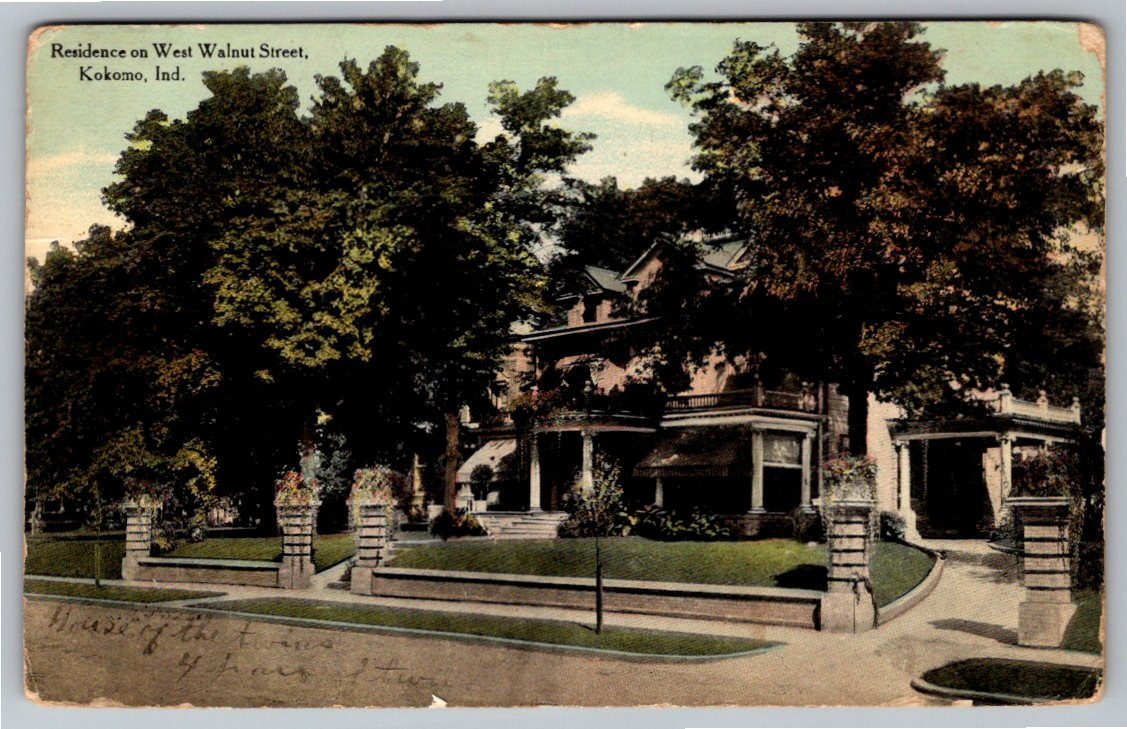
📸 Click any thumbnail to inspect Front, Back & Angles (2 Photos)
As an eBay Partner, we may earn a commission if you make a purchase.
Item Specifications
- Era: Divided Back (1907-1915)
- Year: 1910
- Publisher: S. H. Knox & Co.
- Location: Kokomo, Indiana
- Subject: Residential Architecture
- Postmark Date: September 5, 1910
- Category: Postcards & Ephemera
- Format / Type: Vintage Postcards
Looking for Modern Alternatives?
Explore top-rated, modern Postcards & Ephemera and related historical accessories on Amazon.
Shop Postcards & Ephemera on Amazon →As an Amazon Associate, we earn from qualifying purchases.
Historical Context & Overview
Architectural Grandeur on Kokomo’s West Walnut Street
At the turn of the twentieth century, Kokomo, Indiana, was experiencing a profound economic and cultural transformation. Following the discovery of abundant natural gas in the late 1880s, the region transformed from a quiet agricultural community into a booming industrial center. The wealth generated by new manufacturing enterprises, glass factories, and early automotive innovators reshaped the city’s urban landscape. Tree-lined avenues such as West Walnut Street became premier residential thoroughfares, lined with impressive homes that showcased the prosperity and architectural ambition of Kokomo's leading families.
This original 1910 color postcard offers a captivating glimpse into that prosperous era. The featured home showcases classic Midwest residential architecture of the late Victorian and early Edwardian transition period. Featuring expansive wrap-around porches, detailed gables, decorative stonework piers, and manicured grounds framed by mature shade trees, the property exemplifies the suburban ideal of early 1900s America. Hand-colored tinting enhances the visual narrative, capturing the warm tones of lush greenery and dignified masonry that defined Kokomo's residential districts.
S. H. Knox & Co. and the Golden Age of Postcards
During the "Golden Age" of American postcards—roughly spanning from 1905 to 1915—view cards were a primary medium for visual communication, local pride, and community documentation. This postcard was published exclusively for S. H. Knox & Co., a major chain of five-and-ten-cent stores founded by Seymour H. Knox. Before merging into the F. W. Woolworth Company in 1912, Knox retail locations across the Midwest and Eastern United States commissioned millions of custom-printed view cards featuring local landmarks, public buildings, and prominent streetscapes.
Produced using high-quality lithographic printing techniques, these cards were imported or produced domestically to meet the enormous demand of avid collectors and everyday correspondents. The card conforms to the Divided Back standard, introduced by the U.S. Postal Service in March 1907, which permitted senders to write messages on the left side of the back while reserving the right side strictly for the recipient's address.
A Epistolary Snapshot from September 1910
Beyond its architectural value, the reverse side of this postcard preserves a tangible piece of personal social history. Cancelled with a crisp postmark from nearby Galveston, Indiana, dated September 5, 1910, the card bears a classic green one-cent Benjamin Franklin stamp (Scott #300 / #331 series). The handwritten message, penned in neat cursive script, describes a recent family reunion attended by approximately 150 people—a vivid reminder of the social gatherings that anchored Midwestern community life at the time.
Addressed to a recipient in Blackwell, Oklahoma, the card illustrates the vast reach of the early United States Postal System and how simple one-cent postal views connected family members across the rapidly expanding nation. Today, this artifact stands as a fine piece of Indiana history, offering archivist appeal to regional historians, postcard enthusiasts, and collectors of turn-of-the-century American architecture.