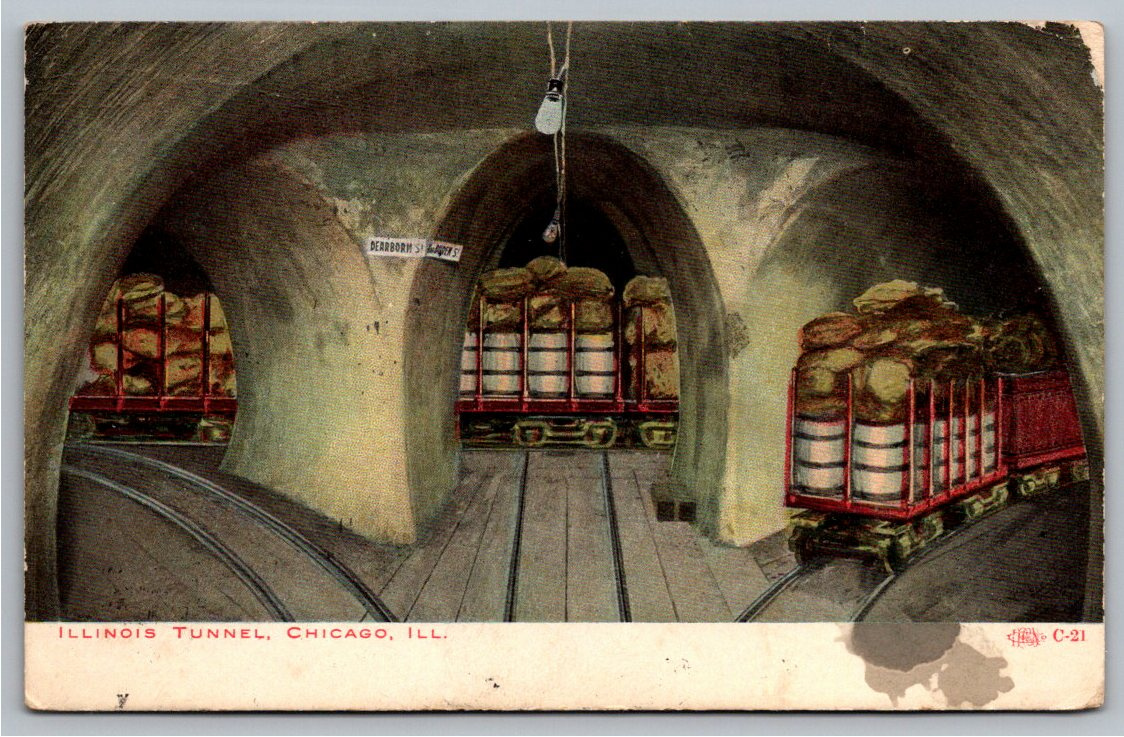
1908 Illinois Tunnel Chicago Underground Freight Train Postcard
📸 Click any thumbnail to inspect Front, Back & Angles (2 Photos)
As an eBay Partner, we may earn a commission if you make a purchase.
Item Specifications
- Era: Divided Back (1907-1915)
- Postmark Date: 1908
- Location: Chicago, Illinois
- Subject: Illinois Tunnel Company
- Card Number: C-21
- Originality: Original Vintage
- Category: Postcards & Ephemera
- Format / Type: Vintage Postcards
Looking for Modern Alternatives?
Explore top-rated, modern Postcards & Ephemera and related historical accessories on Amazon.
Shop Postcards & Ephemera on Amazon →As an Amazon Associate, we earn from qualifying purchases.
Historical Context & Overview
At the turn of the twentieth century, while horse-drawn wagons, electric streetcars, and pedestrians snarled traffic along the surface streets of Chicago’s bustling Loop, an entirely separate transport revolution was quietly taking shape dozens of feet below ground. The Illinois Tunnel Company constructed a subterranean network of narrow-gauge railway tunnels designed to haul coal, merchandise, ash, and freight directly beneath the city’s commercial core. This rare 1908 color lithograph postcard offers a fascinating glimpse into Chicago’s forgotten underground freight railroad during its operational peak.
Chicago’s Secret Subterranean Freight Network
Originally chartered under the guise of an underground telephone cable conduit system, the Illinois Tunnel Project quickly expanded its ambitions into freight transportation. Between 1899 and 1906, workers bored through the soft clay beneath downtown Chicago to build over sixty miles of concrete-lined, arched tunnels running beneath almost every major street in the Loop. Electric locomotives pulled open-sided cars loaded with goods from mainline railroad terminals straight into the basements of major department stores, hotels, and warehouses, effectively bypassing gridlock above.
The artwork on the front of this postcard vividly illustrates the unique geometry of the tunnel intersections. Beneath simple carbon-filament incandescent bulbs hanging from overhead wiring, narrow-gauge tracks branch out through curved, concrete-vaulted chambers. Small freight cars, brimming with wooden barrels and grain sacks, stand on tracks labeled for Dearborn Street—a testament to the precise logistical planning required to navigate the city’s underground grid.
Postmark Analysis & Period Details
This original postcard carries exceptional provenance on its reverse side. Mailed from Chicago on June 12, 1908, and postmarked in Gallatin, Missouri, shortly thereafter, the card features a crisp 1-cent green Benjamin Franklin stamp from the Washington-Franklin issue. The card reflects the early "Divided Back" era (1907–1915), allowing the sender to write a short greeting on the left side while reserving the right side exclusively for the recipient's address.
Cards illustrating industrial infrastructure, urban railways, and subterranean engineering from the early 1900s occupy a coveted niche among antique paper ephemera collectors. Unlike standard postcard views depicting municipal buildings or public parks, subterranean freight depictions were relatively uncommon, produced primarily to showcase the cutting-edge modernity of Midwestern engineering to the rest of the country.
Historical Legacy of the Chicago Tunnels
The Chicago Tunnel Company operated this vast hidden logistics network for several decades before truck traffic on paved roads eventually rendered subterranean rail freight obsolete in the late 1950s. The tunnels sat largely abandoned and forgotten until 1992, when a breached tunnel wall near the Kinzie Street bridge caused a catastrophic flooding event that inundated downtown basements and captured international headlines. Today, surviving artifacts, photographs, and period postcards like this 1908 print serve as crucial historical primary sources, commemorating one of the most innovative civil engineering achievements in American municipal history.