Vintage 1907 Hotel Sherman Chicago Postcard | Streetcars & Autos
📸 Click any thumbnail to inspect Front, Back & Angles (2 Photos)
As an eBay Partner, we may earn a commission if you make a purchase.
Item Specifications
- Era: Divided Back (c. 1907-1915)
- Publisher: V.O. Hammon Publishing Co.
- Location: Chicago, Illinois
- Subject: Hotel Sherman & Urban Transit
- Originality: Original Vintage
- Card Number: 1858
- Category: Postcards & Ephemera
- Format / Type: Vintage Postcards
Looking for Modern Alternatives?
Explore top-rated, modern Postcards & Ephemera and related historical accessories on Amazon.
Shop Postcards & Ephemera on Amazon →As an Amazon Associate, we earn from qualifying purchases.
Historical Context & Overview
A Glimpse into Early 20th-Century Chicago Architecture and Transit
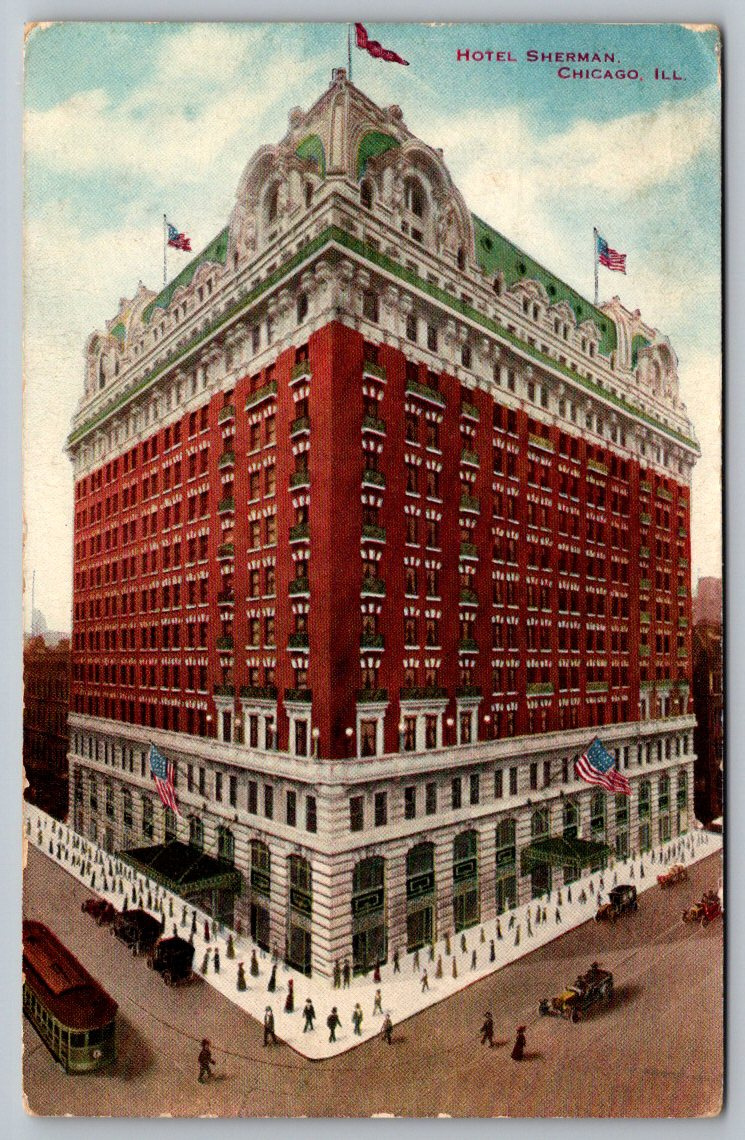
In the opening decade of the twentieth century, Chicago was cementing its place as America's bustling epicenter of industry, architecture, and urban innovation. This striking vintage color postcard, published around 1907, offers a magnificent bird's-eye perspective of the legendary Hotel Sherman standing proudly at the corner of Randolph and Clark Streets in the heart of the Downtown Loop. Beyond capturing the imposing scale of the building, the scene offers a captivating slice-of-life vignette showing the dynamic overlap of electric streetcars, early motorcars, and pedestrian life during a transformative era in American transit history.
The Storied Legacy of Chicago's Hotel Sherman
The site of the Hotel Sherman carries a storied lineage dating back to the mid-19th century, originally established as the City Hotel in 1837 before being renamed the Sherman House in honor of Mayor Francis Cornwall Sherman. After being destroyed in the Great Chicago Fire of 1871, the hotel was rebuilt in even grander fashion. The classic structure depicted on this early post-turn-of-the-century card displays dramatic French Beaux-Arts influence, complete with a prominent mansard roof, vibrant red brickwork, decorative stone cornices, and bold American flags fluttering from its upper balconies.
In later years, the hotel would undergo major expansions and host the world-famous College Inn nightclub, where jazz giants like Louis Armstrong and Bix Beiderbecke performed. During the era shown on this postcard, however, the hotel stood as a premier residence for visiting dignitaries, theatrical stars, and traveling merchants exploring the Midwestern metropolis.
Urban Mobility: Streetcars and Early Automobilism
What makes this specific visual composition so enticing to collectors of urban history is the foreground activity along Clark and Randolph Streets. Positioned at the lower corner of the card is a vivid green electric streetcar operating along the municipal tracks, representing the primary backbone of Chicago mass transit during the 1900s. Navigating alongside the trolley are early "brass era" automobiles and horse-drawn carriages, illustrating the fleeting moment when horses, streetcars, and gasoline-powered motorcars shared the downtown thoroughfares. Crowds of pedestrians dressed in Edwardian attire line the sidewalks, emphasizing the dense, energetic atmosphere of Chicago's business district.
Publisher History: V.O. Hammon Publishing Company
The reverse side of the card features the distinct mark of the V.O. Hammon Publishing Company of Chicago, identifiable by its trademark sailboat crest and production inventory number 1858. Active during the Golden Age of Postcards (roughly 1898 to 1915), Hammon was renowned for producing high-quality color lithographs showcasing Midwestern landmarks, street scenes, and public infrastructure.
The back of the postcard reflects the "divided back" format introduced by the United States Post Office in March 1907, which permitted senders to write personal correspondence on the left side while reserving the right side exclusively for the recipient's address. This feature helps pinpoint the card's production to the exact twilight years of early American postcard design, making it a prized historical artifact for collectors of Chicago heritage, hotel ephemera, and antique transport imagery.