Vintage 1908 Gladstone Blvd & Cliff Drive Postcard, Kansas City
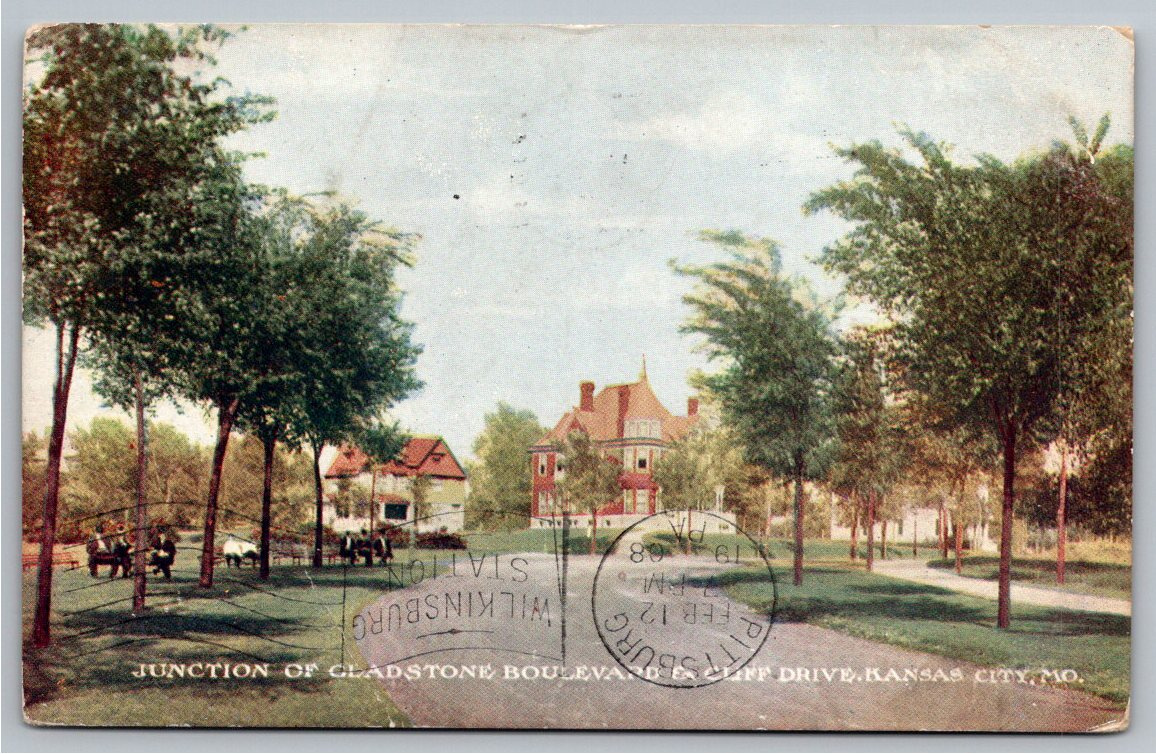
📸 Click any thumbnail to inspect Front, Back & Angles (2 Photos)
As an eBay Partner, we may earn a commission if you make a purchase.
Item Specifications
- Era: Divided Back (1907-1915)
- Year: 1908
- Publisher: C. W. France, Kansas City, MO
- Location: Kansas City, Missouri
- Subject: Gladstone Boulevard & Cliff Drive Junction
- Postmark Date: Feb 11, 1908
- Category: Postcards & Ephemera
- Format / Type: Vintage Postcards
Looking for Modern Alternatives?
Explore top-rated, modern Postcards & Ephemera and related historical accessories on Amazon.
Shop Postcards & Ephemera on Amazon →As an Amazon Associate, we earn from qualifying purchases.
Historical Context & Overview
This original color lithograph postcard captures a pristine moment in Midwestern urban history: the leafy intersection of Gladstone Boulevard and Cliff Drive in Kansas City, Missouri. Postmarked on February 11, 1908, during the Golden Age of Postcards, the image depicts a peaceful scenic vista along one of the nation's most celebrated early boulevard networks. The view offers a fascinating look into early twentieth-century urban design, where progressive city planning and natural Missouri topography merged to create lush residential refuges.
The Legacy of George Kessler’s Park System
At the turn of the twentieth century, Kansas City underwent a dramatic aesthetic transformation under the guidance of visionary landscape architect George E. Kessler. As a key figure in the national "City Beautiful" movement, Kessler designed an interconnected system of wide, tree-lined boulevards and expansive public parks intended to bring nature directly into city living. Gladstone Boulevard served as a grand residential avenue through the Historic Northeast district, while Cliff Drive was engineered as a winding scenic parkway carved directly into the rugged limestone bluffs overlooking the Missouri River Valley. This view illustrates the junction where these two famous thoroughfares converged, showcasing mature shade trees, neatly manicured parkways, and inviting pedestrian footpaths.
Architectural Splendor in Kansas City's Historic Northeast
Framed by towering elm and oak trees in the center background stands a stately multi-story residence featuring prominent gables, turrets, and rich brick masonry characteristic of Gilded Age revival styles. Gladstone Boulevard was renowned during this era for its opulent homes built by prominent industrial magnates, merchants, and civic leaders. The postcard depicts the quiet, manicured elegance that these grand boulevards offered, complete with wooden park benches positioned along the grassy commons where local residents gathered to socialize and take the air.
A Window into Early 20th-Century Postal History
Published locally by C. W. France of Kansas City, Missouri, this piece is an excellent example of early American divided-back postcard production, a format officially authorized in the United States in March 1907. The reverse side features a green one-cent Benjamin Franklin postage stamp paired with a crisp Kansas City machine cancellation dated February 11, 1908. A handwritten note penned in fountain pen cursive reads, "I am leaving for Oklahoma to-night," addressed to a recipient in Wilkinsburg, Pennsylvania. A receiving transit postmark struck across the front left corner on February 12, 1908, documents the remarkable speed of the American railway mail network during the turn of the century.