1970s Harbor Branch Johnson-Sea-Link Submersible Photo Archive
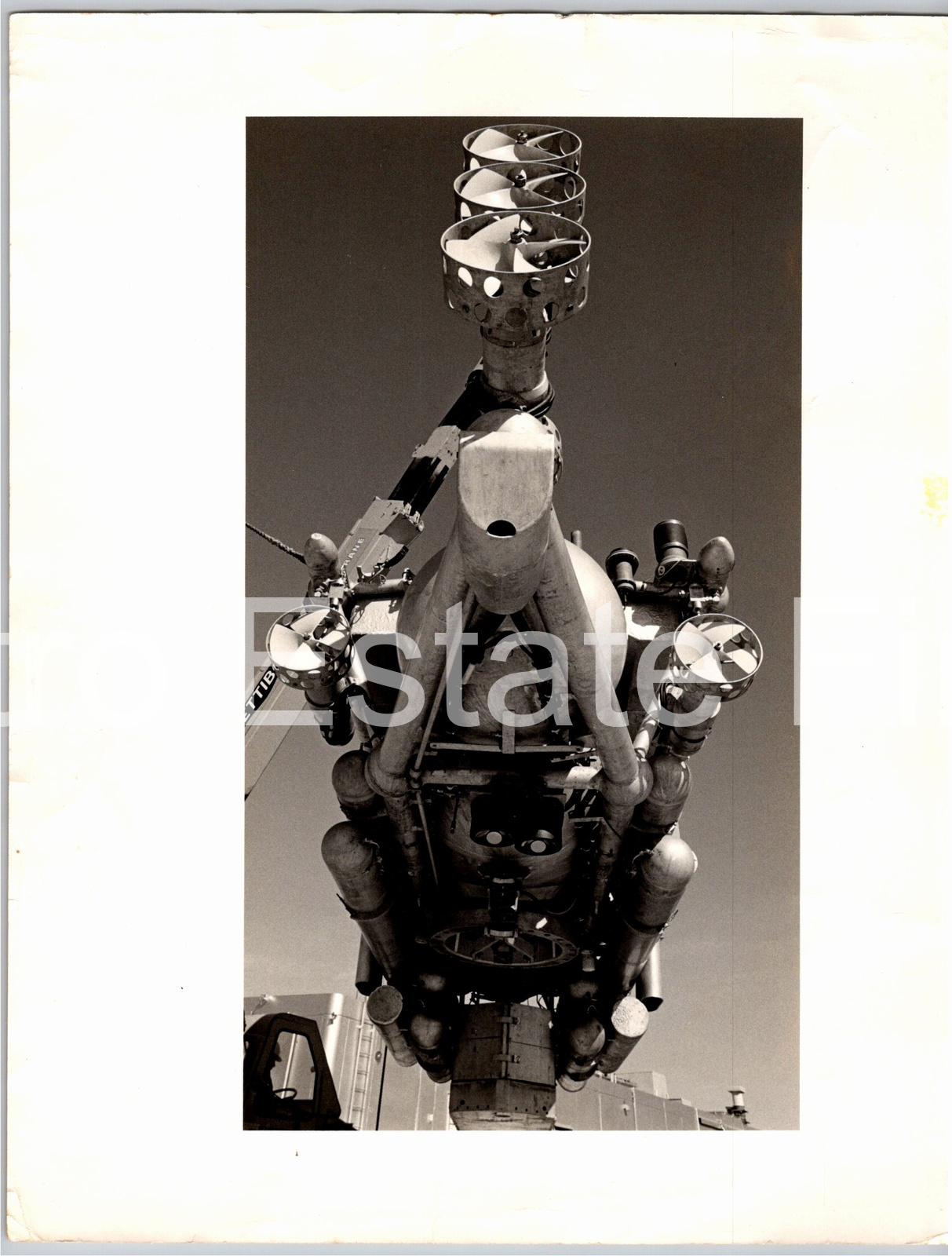
📸 Click any thumbnail to inspect Front, Back & Angles (12 Photos)
As an eBay Partner, we may earn a commission if you make a purchase.
Item Specifications
- Type: Oceanographic Research Archive
- Era: 1970s
- Subject: Johnson-Sea-Link Submersible
- Organization: Harbor Branch Foundation
- Location: Fort Pierce, Florida
- Photographer: Bob Coeberly
- Category: Vintage Photography
- Format / Type: Vintage Photographs
Looking for Modern Alternatives?
Explore top-rated, modern Vintage Photography and related historical accessories on Amazon.
Shop Vintage Photography on Amazon →As an Amazon Associate, we earn from qualifying purchases.
Historical Context & Overview
During the golden age of deep-sea exploration in the 1970s, the Harbor Branch Foundation in Fort Pierce, Florida, emerged as a premier force in marine research and oceanographic engineering. Founded by inventor and aviation pioneer Edwin A. Link alongside philanthropist Seward Johnson, the institute sought to push the boundaries of human sub-surface capability. Central to their mission was the development and deployment of the Johnson-Sea-Link (JSL) submersibles—revolutionary deep-diving research vessels that transformed undersea exploration.
Engineering Marvels of the Deep Ocean
Commissioned in 1971, the original Johnson-Sea-Link I introduced unprecedented engineering innovations designed specifically for marine scientists. Unlike traditional military or industrial submersibles of the era, the JSL featured a forward-facing acrylic sphere that afforded pilots and oceanographers an unobstructed 360-degree view of underwater environments down to depths of several thousand feet. Behind the acrylic sphere lay a separate aluminum pressure hull serving as a diver lockout chamber, allowing marine scientists to collect specimens directly from the seafloor.
The technical sophistication of these submersibles required meticulous surface monitoring and real-time operational oversight. Onboard control rooms, equipped with precise sea-water pressure gauges, depth sounders, and complex ballast air monitoring systems, allowed engineers to track every phase of a dive. Powerful thruster arrays mounted on lightweight aluminum framing gave the JSL extraordinary maneuverability near fragile coral reefs, deep-sea trenches, and shipwrecks.
Documenting Oceanographic History
This original vintage photo archive, dating from 1973 to 1977, offers an insider's look into the operational routines and technological breakthroughs of the Harbor Branch team. Captured in crisp black-and-white photography—including credited work by oceanographic photographer Bob Coeberly—the collection documents critical moments in early deep-submergence history. Imagery ranges from detailed close-up views of the submersible’s mechanical thrusters and control panels to dramatic surface recovery operations in open ocean waters.
Stamped by the Harbor Branch Foundation, Inc., with official Fort Pierce, Florida press markings, these archival photographs capture both the high-stakes mechanical prep work on dry land and the active maritime deployments at sea. Technicians are shown managing control consoles lined with retro analog instrumentation, reflecting the incredible technological ingenuity of mid-20th-century ocean exploration.
A Treasured Artifact for Maritime Enthusiasts
For collectors of maritime heritage, naval engineering history, and vintage scientific photography, this primary-source archive represents a fascinating portal into the heroics of 1970s deep-sea science. Artifacts from the early years of the Harbor Branch Foundation serve as tangible reminders of how human curiosity and bold engineering opened up the deepest frontiers of our ocean planet.