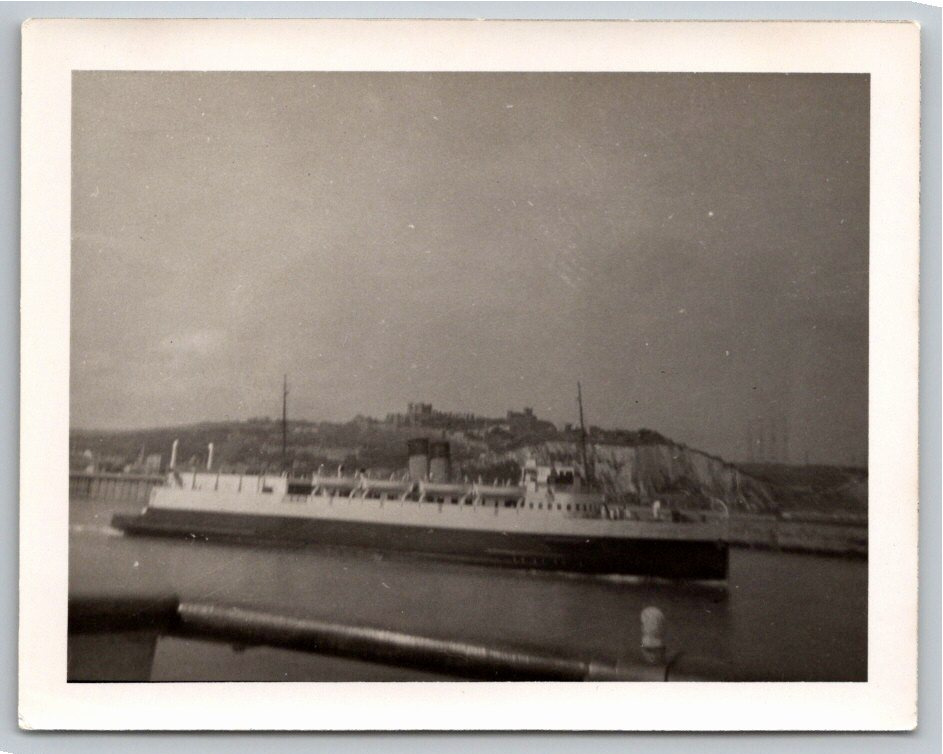
1950s English Channel Steamship Ferry & Dover Castle Vintage
📸 Click any thumbnail to inspect Front, Back & Angles (2 Photos)
As an eBay Partner, we may earn a commission if you make a purchase.
Item Specifications
- Era: 1950s
- Location: Dover, Kent, England
- Subject: Steamship Ferry & Dover Castle
- Medium: Gelatin Silver Print
- Condition: Vintage Original
- Theme: Maritime & English Channel Travel
- Category: Vintage Photography
- Format / Type: Snapshots
Looking for Modern Alternatives?
Explore top-rated, modern Vintage Photography and related historical accessories on Amazon.
Shop Vintage Photography on Amazon →As an Amazon Associate, we earn from qualifying purchases.
Historical Context & Overview
A Mid-Century Passage Across the English Channel
In the decade following the Second World War, maritime transit across the Dover Strait experienced a vibrant renaissance. As civilian travel resumed and automobile tourism expanded rapidly across Western Europe, the English Channel became one of the busiest maritime thoroughfares in the world. This original circa 1950s black-and-white snapshot captures a quintessential scene of post-war British travel: a mid-century passenger and mail steamship ferry gliding past the formidable backdrop of Dover’s historic coastline.
Framed against the rising chalk terrain, Dover Castle stands proudly atop the cliffs in the background—a medieval fortress with roots stretching back to the Roman and Anglo-Saxon eras. Below it, the dramatic white cliffs meet the waters of Dover Harbour, long serving as the symbolic gateway to Great Britain. For generations of travelers returning home from continental Europe or setting out on overseas journeys, this precise vista was an unmistakable marker of homecoming or adventure.
Maritime Innovation and Post-War Travel
The ferry featured in this candid photograph reflects the transitional period of mid-20th-century naval architecture. During the 1950s, major cross-Channel operators such as British Railways (Southern Region) and French National Railways (SNCF) deployed steam-turbine vessels specifically designed for efficient short-sea crossings. Ships equipped with double funnels, extensive lifeboat davits, and low-slung hulls carried thousands of holidaymakers, commuter cars, and rail passengers daily between Dover, Folkestone, Calais, and Boulogne.
During this mid-century period, Dover Harbour underwent significant modernization to accommodate the emerging demand for drive-on, roll-on/roll-off ferry services. Prior to these widespread dockside upgrades, cars were often lifted aboard vessels using heavy steam cranes, making these versatile passenger liners pivotal in the evolution of modern maritime transit.
Authenticity in Vernacular Photography
Captured from the deck railing of another vessel in the foreground, this photograph offers an authentic contemporary perspective that mass-produced commercial postcards simply cannot replicate. Vernacular snapshots taken by everyday travelers on personal roll-film cameras preserve real-time history, capturing genuine atmosphere, natural lighting, and unposed operational moments.
For enthusiasts of nautical heritage, post-war British history, and vintage transportation ephemera, this 1950s photograph stands as a compelling artifact. It preserves a classic moment from the golden age of steamship travel, when crossing the narrow sea to the Continent was a grand and celebrated tradition.