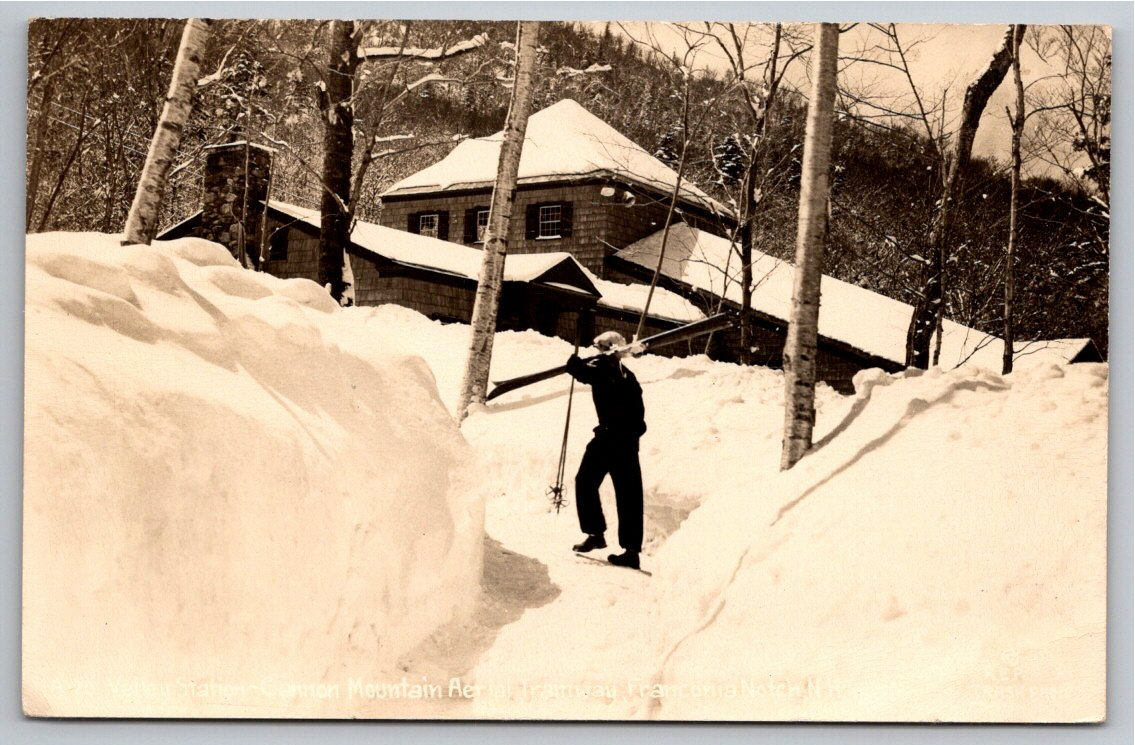
1930s Cannon Mountain Aerial Tramway Skier Real Photo Postcard
📸 Click any thumbnail to inspect Front, Back & Angles (2 Photos)
As an eBay Partner, we may earn a commission if you make a purchase.
Item Specifications
- Type: Real Photo Postcard (RPPC)
- Era: 1930s
- Location: Cannon Mountain, New Hampshire
- Subject: Skier at Valley Station Tramway
- Region: Franconia Notch, White Mountains
- Originality: Original Vintage
- Category: Postcards & Ephemera
- Format / Type: Real Photo Postcards (RPPC)
Looking for Modern Alternatives?
Explore top-rated, modern Postcards & Ephemera and related historical accessories on Amazon.
Shop Postcards & Ephemera on Amazon →As an Amazon Associate, we earn from qualifying purchases.
Historical Context & Overview
The 1930s marked a pivotal turning point in American winter sports culture. Before the advent of chairlifts and high-speed cable cars, skiing in North America required grueling uphill treks for a few cherished minutes of downhill adrenaline. That paradigm shifted dramatically with the construction of the Cannon Mountain Aerial Tramway in Franconia Notch, New Hampshire. Opening in June 1938, it was the first passenger aerial tramway in North America, forever securing Cannon Mountain's place in alpine skiing history. This pristine real photo postcard (RPPC) captures a skier making their way through deep snow banks toward the timber-framed Valley Station during that golden pioneer era.
The Birth of Alpine Ski Culture in Franconia Notch
In the early decades of the twentieth century, New England served as the beating heart of American ski culture. Cannon Mountain, situated in the rugged heart of the White Mountain National Forest, became a central hub for winter sports enthusiasts seeking challenging terrain. The vision for an aerial tramway was championed by local civic leaders and forestry officials who recognized the mountain's immense potential for year-round tourism. When the tramway launched, its distinctive red cable cars—affectionately called the "Tram"—carried up to 27 passengers at a time, whisking skiers from the Valley Station to the summit in just under eight minutes.
This dramatic leap forward in ski infrastructure transformed Franconia Notch into a premier destination. Skiers from across the Northeast boarded special weekend "Snow Trains" out of Boston's North Station, traveling up into the mountains equipped with thick wool trousers, leather lace-up boots, and long, un-edged wooden skis.
A Photographic Window Into Pioneer Winter Sports
What makes Real Photo Postcards (RPPCs) so treasured among historians and collectors is their absolute fidelity to time and place. Unlike mass-printed lithographic postcards, an RPPC was printed directly from a photographic negative onto light-sensitive photo paper, yielding exceptional clarity, depth, and tonal contrast.
In this captivating scene, a solitary skier carries heavy wooden skis over his shoulder, trekking through a deeply cut snow path bounded by massive snowdrifts. In the background stands the iconic shingle-style Valley Station, framed by birch trees and heavily forested slopes. The composition perfectly conveys the quiet winter atmosphere, rugged terrain, and adventurous spirit that characterized New Hampshire skiing prior to the Second World War.
Legacy for White Mountain Collectibles
For collectors of New England history, ski ephemera, and vintage photographica, early Cannon Mountain paper items are exceptionally highly regarded. Real photo postcards depicting active skiers from the late 1930s remain particularly scarce, as many souvenirs focused primarily on the tramway cabins themselves rather than the individuals who braved the slopes. This authentic photograph stands as both an engaging work of photographic art and a lasting record of the dawn of modern American winter recreation.