Vintage 1911 Forest Park Bird Cage Postcard St. Louis Missouri
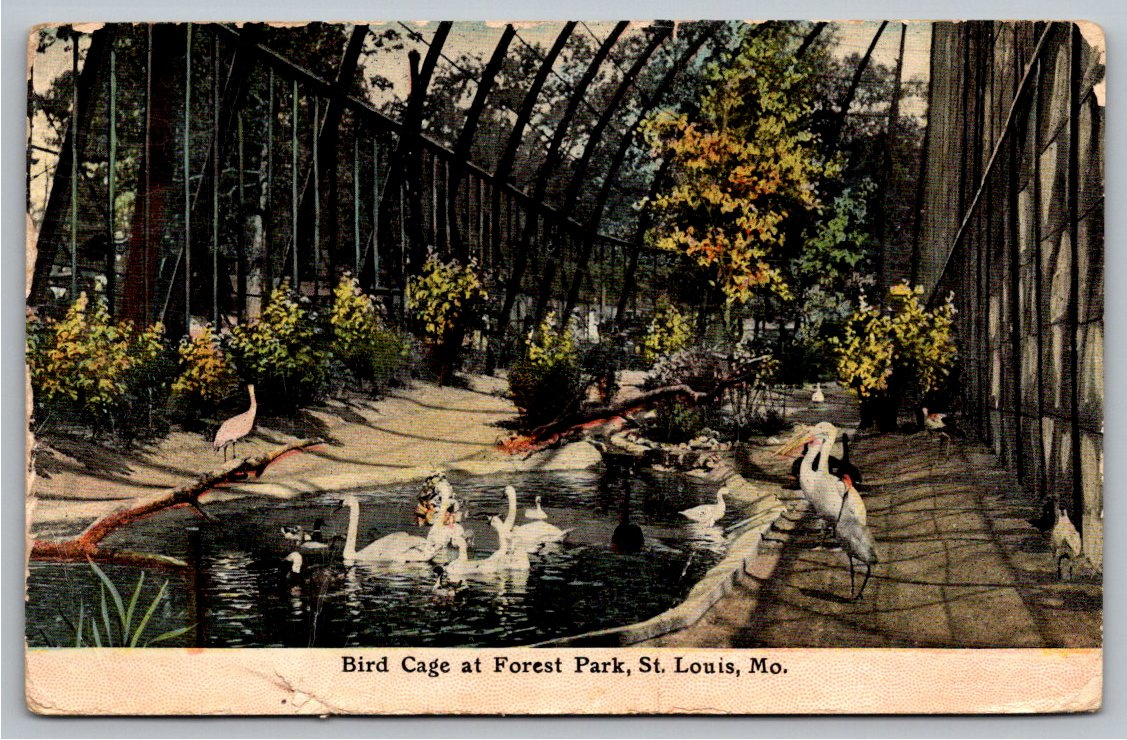
📸 Click any thumbnail to inspect Front, Back & Angles (2 Photos)
As an eBay Partner, we may earn a commission if you make a purchase.
Item Specifications
- Era: Divided Back (1907–1915)
- Postmark Date: July 21, 1911
- Location: Forest Park, St. Louis, Missouri
- Subject: Flight Cage & Aviary Waterfowl
- Publisher: S. H. Knox & Co.
- Originality: Original Vintage
- Category: Postcards & Ephemera
- Format / Type: Vintage Postcards
Looking for Modern Alternatives?
Explore top-rated, modern Postcards & Ephemera and related historical accessories on Amazon.
Shop Postcards & Ephemera on Amazon →As an Amazon Associate, we earn from qualifying purchases.
Historical Context & Overview
In 1904, millions of visitors descended upon St. Louis for the Louisiana Purchase Exposition, a grand World's Fair that showcased industrial ingenuity, architectural splendour, and natural marvels. Among its most breathtaking installations was the Smithsonian Institution's giant steel walk-through aviary, constructed right in the heart of Forest Park. When the exposition came to a close, local citizens rallied to prevent the majestic structure from being dismantled. Their passion paid off: the city purchased the cage, laying the cornerstone for what would become the world-renowned Saint Louis Zoo.
A Turn-of-the-Century Architectural Wonder
This colorized vintage postcard, postmarked in July 1911, offers a rare glimpse into the early public life of the Forest Park Flight Cage. Spanning an astonishing 228 feet long, 84 feet wide, and 50 feet high, the structure was one of the largest free-flight aviaries ever built at the turn of the twentieth century. The postcard illustrates the lush internal ecosystem created for its avian residents, complete with winding footpaths, natural rockwork, mature foliage, and a central aquatic pool where flamingos, pelicans, swans, and wading birds gathered in peaceful coexistence.
The image captures the Victorian-era romanticism surrounding public parks and nature conservation during the early 1900s. Rather than viewing animals in small iron cages, urban parkgoers could walk beneath a sprawling vault of steel mesh, observing waterfowl swimming and flying in an environment designed to mimic their native habitats.
Delving into the Postcard's Historical Context
Published by S. H. Knox & Co., a major chain of early five-and-ten-cent stores, this card reflects the golden age of postcard collecting in America (1907–1915). Printed on textured stock with vivid hand-tinted colors, the front bears a simple, elegant caption: "Bird Cage at Forest Park, St. Louis, Mo."
Flipping the postcard reveals a rich fragment of personal history. Postmarked in St. Louis on July 21, 1911—bearing a classic green one-cent Benjamin Franklin postage stamp—the card was sent to a recipient in Kansas. The handwritten message in dark ink captures a hot Midwestern summer day, making specific reference to the visiting experience at Forest Park and the impressiveness of the cage itself. Such handwritten ephemera provides a direct portal into early 20th-century daily life, capturing brief moments of connection preserved across more than a century.
An Enduring Legacy for Collectors
Today, the Forest Park Flight Cage remains a beloved landmark inside the Saint Louis Zoo, officially known as the 1904 World's Fair Flight Cage. While modern renovations have continually updated the habitat for present-day bird species, early postcard views like this one serve as essential historical records of urban park design, architectural conservation, and the dawn of modern zoological exhibits.