1907 R. L. Wells "Who's Afraid" Novelty Postcard | Vintage Elf
📸 Click any thumbnail to inspect Front, Back & Angles (2 Photos)
As an eBay Partner, we may earn a commission if you make a purchase.
Item Specifications
- Era: Divided Back (1907–1915)
- Copyright Date: 1907
- Artist & Publisher: R. L. Wells
- Subject: Children and Jack-in-the-Box Elf
- Origin: United States
- Postmark Location: Lincoln, Kansas
- Category: Postcards & Ephemera
- Format / Type: Vintage Postcards
Looking for Modern Alternatives?
Explore top-rated, modern Postcards & Ephemera and related historical accessories on Amazon.
Shop Postcards & Ephemera on Amazon →As an Amazon Associate, we earn from qualifying purchases.
Historical Context & Overview
A Whimsical Glimpse into Early 20th-Century Children's Illustration
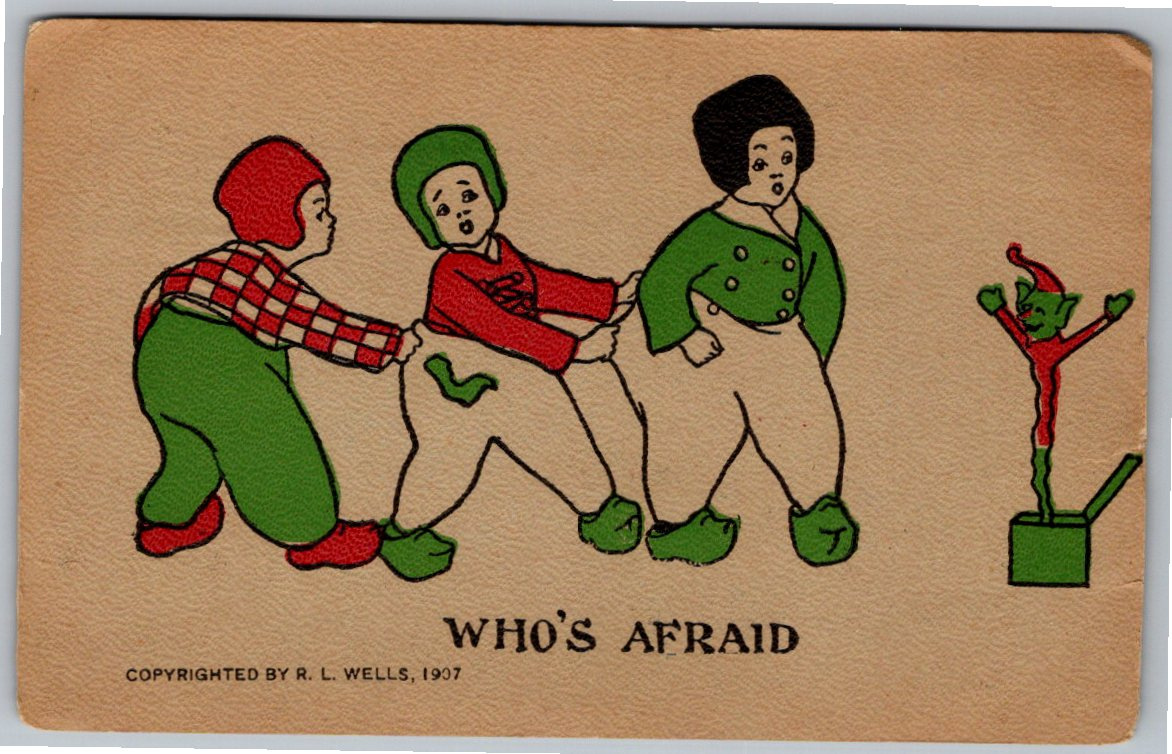
During the Golden Age of Postcards (roughly 1907 to 1915), publishers and illustrators competed to captivate the public with playful humor, vibrant color palettes, and charming scenes of everyday childhood. Among these delightful novelty releases is this 1907 postcard creation copyrighted by artist R. L. Wells, titled "Who's Afraid." Featuring three Dutch-styled children confronting a spring-loaded jack-in-the-box elf, the artwork captures the timeless blend of timid hesitation and playful curiosity familiar to childhood games.
The visual narrative relies on minimalist linework paired with bold color blocks—vibrant red caps, forest-green trousers, and patterned shirts contrast against a warm, natural tan paper stock. The children line up single file, each clutching the waistband of the sibling or friend ahead of them for courage as they inspect the mischievous green elf bursting from its box. It is a wonderfully executed example of turn-of-the-century American postcard illustration, combining humor, character design, and the nostalgic magic of classical mechanical toys.
The Cultural Fascination with Mechanical Novelty Toys
In 1907, mechanical surprise toys like the jack-in-the-box were fixtures of nursery playrooms. Originating centuries earlier in Europe, these mechanical pop-up toys evolved into standard fixtures of Victorian and Edwardian pop culture. Artists like R. L. Wells routinely used these iconic toys as comedic props in postcard art, capturing the emotional dramatic suspense that made novelty toys so thrilling to young audiences.
The subtitle, "Who's Afraid," acts as a gentle taunt to the reader, ironically pointing out how the three children—despite their brave front—are clearly startled by the tiny green jester. This lighthearted ironical commentary was a popular motif in early 1900s humor cards, which often relied on short captions to deliver a clever punchline to the recipient upon opening their mail.
Postal History & Collector Appeal
This original postcard reflects the transition to the Divided Back Era, authorized by the United States Postal Service in early 1907. Prior to this landmark rule change, the back of postcards was reserved exclusively for the recipient's address, forcing senders to squeeze their personal messages onto the front borders. The divided back format allowed for extended handwritten letters on the left side, as seen in the ink inscription addressed to Manhattan, Kansas, postmarked in Lincoln, Kansas.
Affixed with a green one-cent Benjamin Franklin stamp, this antique piece serves as a dual collectible: a piece of early 20th-century graphic art history and an authentic snapshot of postal history from the heartland of Edwardian America. For collectors of antique novelty postcards, vintage toy imagery, or R. L. Wells illustration art, this 1907 card remains a standout piece from a bygone era of print design.