Vintage 1900s Niagara Falls NY Third Sister Island Bridge
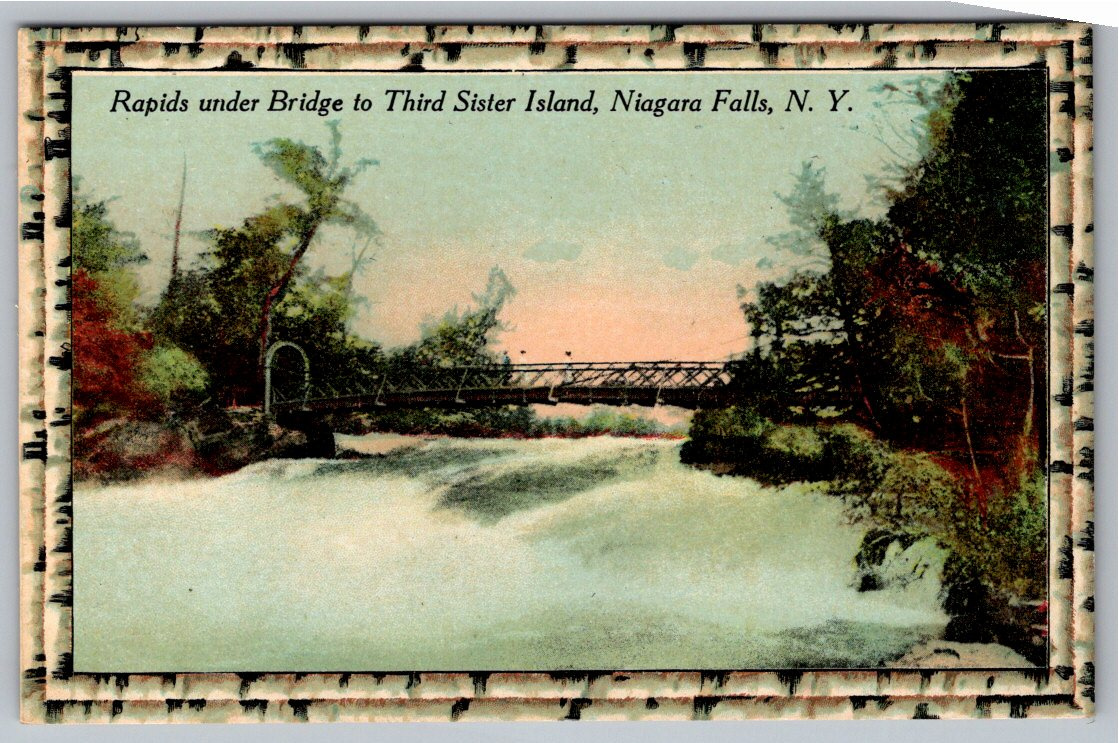
📸 Click any thumbnail to inspect Front, Back & Angles (2 Photos)
As an eBay Partner, we may earn a commission if you make a purchase.
Item Specifications
- Era: 1900s Divided Back
- Location: Niagara Falls, New York
- Subject: Third Sister Island Bridge & Rapids
- Originality: Original Vintage
- Theme: Natural Wonders & Bridges
- Border: Faux Birch Bark Frame
- Category: Postcards & Ephemera
- Format / Type: Vintage Postcards
Looking for Modern Alternatives?
Explore top-rated, modern Postcards & Ephemera and related historical accessories on Amazon.
Shop Postcards & Ephemera on Amazon →As an Amazon Associate, we earn from qualifying purchases.
Historical Context & Overview
Crossing the Torrent: Niagara’s Historic Three Sisters Islands
In the heart of the roaring Niagara River, situated just upstream from the precipitous plunge of Horseshoe Falls, lie three small, pristine forested islets collectively known as the Three Sisters Islands. Named after Asenath, Angeline, and Celinda Whitney—the daughters of prominent early 19th-century hotelier General Parkhurst Whitney—these rocky outcroppings were preserved as an integral part of the Niagara Reservation, New York State’s first state park established in 1885. This exquisite early 1900s postcard captures the slender pedestrian bridge that granted courageous visitors safe passage over the swirling currents to the outermost sanctuary: Third Sister Island.
Standing upon the footbridge portrayed in this colorized lithograph offered turn-of-the-century travelers an unprecedented, exhilarating encounter with nature. Directly beneath the narrow span, violent whitewaters churn and surge with immense power before sweeping downstream toward the falls. The bridge itself, constructed with decorative arched portals and structural iron lattice work, represented both an engineering feat and an invitation to experience the untamed power of the river from a position of relative safety.
Rustic Aesthetics and Turn-of-the-Century Postcard Artistry
A particularly captivating feature of this original postcard is its decorative frame, designed to mimic natural birch bark. This rustic design motif was immensely popular during the Edwardian era, purposely chosen by publishers to evoke feelings of wilderness exploration, natural harmony, and Northwoods camp life. The subtle hand-tinted color lithography brings out the rich amber hues of the setting sun, the deep greens of the riverbank foliage, and the dramatic foaming water beneath the bridge.
The reverse side of the postcard features a classic divided-back layout. First authorized by the United States Post Office Department in March 1907, the divided back revolutionized American deltiology by allowing senders to write personal messages on the left side while reserving the right side strictly for the address. Remaining unposted and clean, this card stands as a remarkably fresh physical document from the golden age of postcard collecting.
A Worthy Addition for Niagara & Architectural Historians
For collectors of Niagara Falls memorabilia, historical bridge architecture, and early 20th-century American ephemera, views of the Three Sisters Islands hold lasting historical value. While modern steel spans have since replaced the historic footbridges on Goat Island, period artifacts such as this card preserve the original aesthetic and romantic spirit that defined America’s pioneer era of public park design and natural conservation.