Vintage WWII B-24 Liberator Night Bomber Postcard, Keesler Field
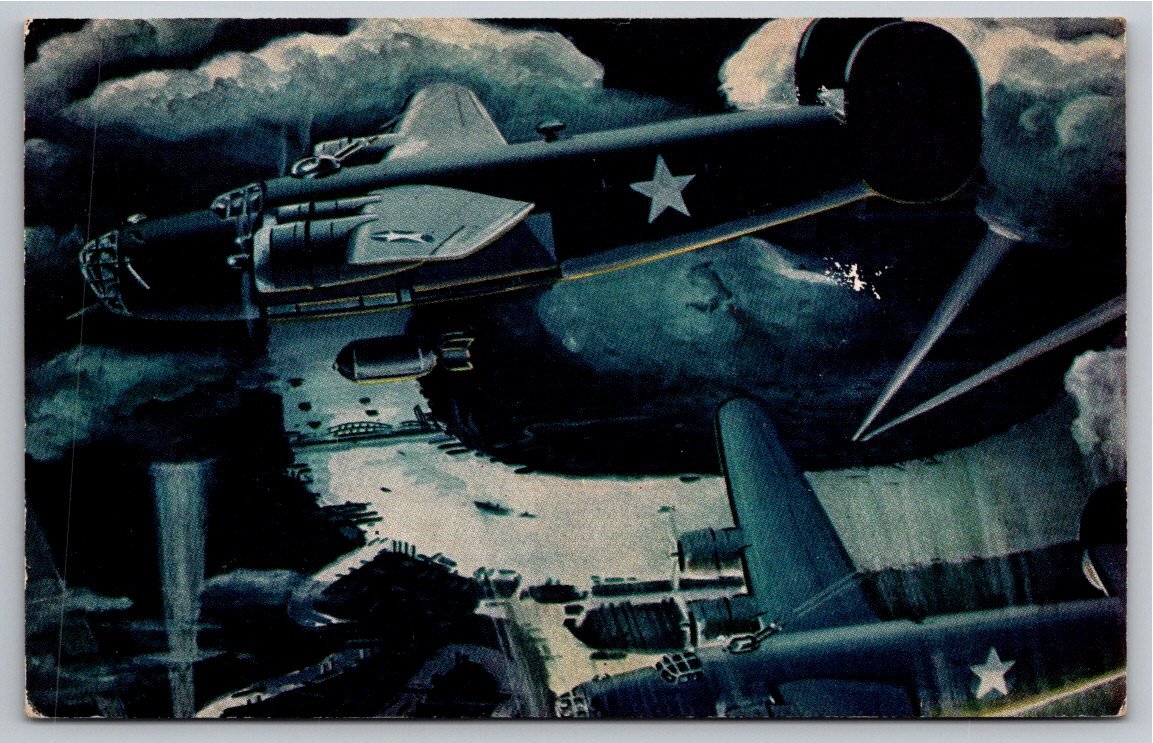
📸 Click any thumbnail to inspect Front, Back & Angles (2 Photos)
As an eBay Partner, we may earn a commission if you make a purchase.
Item Specifications
- Era: 1940s WWII
- Artist: Sgt. Kenneth Gordon
- Publisher: Special Services, Keesler Field
- Location: Biloxi, Mississippi
- Subject: B-24 Liberator Bomber
- Originality: Original Vintage
- Category: Postcards & Ephemera
- Format / Type: Vintage Postcards
Looking for Modern Alternatives?
Explore top-rated, modern Postcards & Ephemera and related historical accessories on Amazon.
Shop Postcards & Ephemera on Amazon →As an Amazon Associate, we earn from qualifying purchases.
Historical Context & Overview
During the height of World War II, the United States Army Air Forces relied heavily on the legendary Consolidated B-24 Liberator. Produced in greater numbers than any other American military aircraft in history, the B-24 was a heavy bomber capable of immense payload delivery, long ranges, and high-altitude operations across both the European and Pacific theaters. Behind every successful bombing mission was an army of skilled ground technicians and mechanics whose rigorous training was forged at domestic bases like Keesler Field in Biloxi, Mississippi.
Art in the Service of National Defense
This striking vintage postcard presents a dramatic wartime illustration titled Night Bombers, created by Sergeant Kenneth Gordon while serving with the Special Services division at Keesler Field. Rendered with vivid atmospheric detail, the artwork captures a formation of B-24 Liberators banking through nocturnal skies illuminated by searchlight beams and anti-aircraft flak over a target area below. Sgt. Gordon’s technical studies of the B-24 were celebrated for their extraordinary fidelity, offering airmen and trainees an accurate depiction of the aircraft in action.
According to historical notes published on the reverse of the card, Sgt. Gordon’s artistic studies were widely reproduced and prominently displayed throughout Keesler Field—hanging in training classrooms, headquarters facilities, and communal halls across the base. These visual aids served a dual purpose: they fostered morale and pride among the troops while familiarizing young mechanics with the silhouetted profile and structural lines of the heavy bomber they were learning to maintain.
Keesler Field and the Maintenance of the Air Fleet
Established in 1941, Keesler Field quickly became one of the nation's premier technical training centers for the Army Air Forces. Thousands of mechanics passed through its gates to learn the intricate systems powering complex multi-engine aircraft like the B-24 Liberator. Maintaining the Liberator's high-aspect Davis wing, twin-tail assembly, and four Pratt & Whitney radial engines required specialized knowledge, making Keesler’s school a vital engine of the Allied war effort.
A Rare Piece of Base-Issued Ephemera
Unlike commercial postcards mass-produced by major publishers for civilian tourists, this card was officially presented by the Special Services unit directly at Keesler Field. Base-issued wartime prints and official military art postcards represent a specialized niche within military aviation collecting. For historians, philatelists, and World War II enthusiasts, this vintage item stands as a compelling fusion of combat aviation history, military base culture, and fine wartime graphic design.