Vintage 1950s Arlington Tomb of the Unknown Soldier Guard
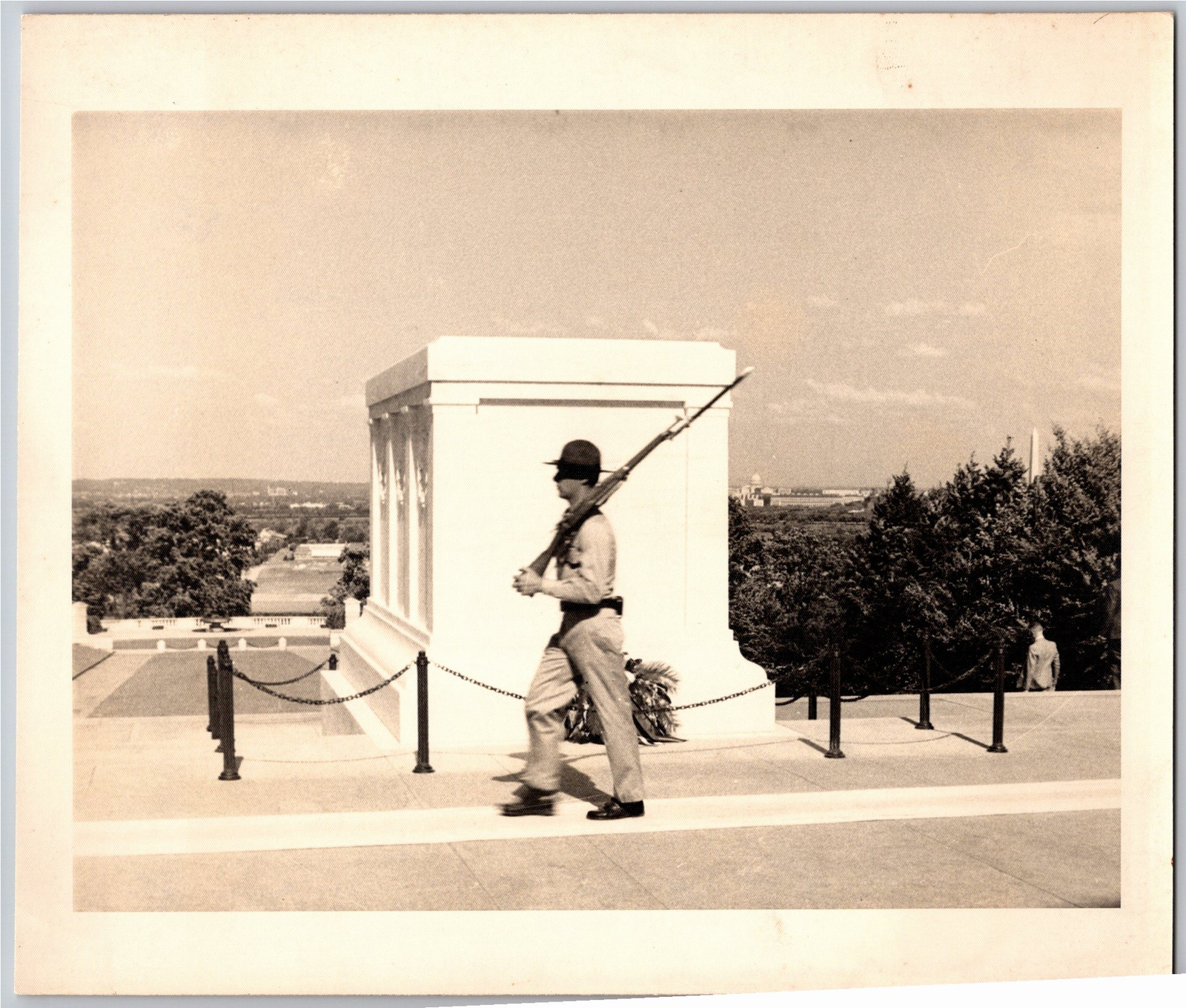
📸 Click any thumbnail to inspect Front, Back & Angles (4 Photos)
As an eBay Partner, we may earn a commission if you make a purchase.
Item Specifications
- Type: Original Black & White Photograph Pair
- Era: 1950s
- Subject: Tomb of the Unknown Soldier
- Location: Arlington National Cemetery, Virginia
- Military Unit: 3rd U.S. Infantry Regiment (The Old Guard)
- Originality: Original Mid-Century Vintage
- Category: Vintage Photography
- Format / Type: Vintage Photographs
Looking for Modern Alternatives?
Explore top-rated, modern Vintage Photography and related historical accessories on Amazon.
Shop Vintage Photography on Amazon →As an Amazon Associate, we earn from qualifying purchases.
Historical Context & Overview
Few monuments in American history command the quiet reverence of the Tomb of the Unknown Soldier at Arlington National Cemetery. Established high on a ridge overlooking Washington, D.C., the tomb stands as a timeless sanctuary dedicated to the unidentified American service members who sacrificed their lives in defense of the nation. Captured during the mid-20th century, these striking silver gelatin photographs offer an intimate lens into the solemn rituals, monumental architecture, and unrelenting vigilance that define this sacred ground.
The Eternal Vigil: The 3rd U.S. Infantry Regiment
Perched above the Potomac River, the Tomb of the Unknown Soldier originally received its first interment on November 11, 1921—an unidentified World War I combatant selected from among American casualties in France. By 1926, a continuous military guard was established to protect the site from public intrusion. On April 6, 1948, the responsibility was officially assigned to the 3rd U.S. Infantry Regiment, famously known as "The Old Guard"—the oldest active-duty infantry unit in the United States Army.
The Sentinels of the Old Guard perform a meticulously choreographed patrol that has continued unbroken, 24 hours a day, 365 days a year, through every weather condition imaginable. In the wide-angle view, a Sentinel marches his post with resolute precision, carrying his sidearm or rifle with bayonet fixed. The Sentinel's march requires exactly 21 steps along a black mat, followed by a 21-second posture toward the east, a crisp turn, and another 21-second pause before retracing the path. The constant iteration of twenty-one symbolizes the highest military honor: the 21-gun salute.
A Sacred Inscription and Mid-Century Transition
The close-up photograph captures the iconic western facade of the white Yule marble sarcophagus, designed by architect Lorimer Rich and sculptor Thomas Hudson Jones. Beneath a carefully draped commemorative wreath rests the deeply carved statement: "HERE RESTS IN HONORED GLORY AN AMERICAN SOLDIER KNOWN BUT TO GOD." The crisp black-and-white tonal depth highlights the texture of the Colorado marble and the iron link barrier that frames the perimeter.
Dating to the 1950s, this photograph pair captures Arlington during a critical era of transition. Following the end of the Second World War and the Korean Conflict, plans were set in motion to select unidentified casualties from those theaters as well. In May 1958, President Dwight D. Eisenhower presided over the dual funeral service where two additional Unknowns were laid to rest beside the original World War I tomb crypts.
Preserving Mid-Centuy Military Heritage
For collectors of historical photography, militaria enthusiasts, and documentary historians, large-format prints from this era provide an unmatched record of mid-century military tradition. Unlike modern digital images, mid-century silver gelatin photography captures fine spatial gradients—from the sweeping background view of the Washington Monument across the Potomac to the intricate ribbon folds of a memorial wreath. These photos stand as enduring visual testaments to honor, duty, and national memory.