1980s Tinsmith Living History Workshop Vintage Color Photo
📸 Click any thumbnail to inspect Front, Back & Angles (2 Photos)
As an eBay Partner, we may earn a commission if you make a purchase.
Item Specifications
- Era: 1980s
- Subject: Living History Tinsmithing
- Location: Historic Museum Workshop
- Medium: Color Photographic Paper
- Originality: Original Vintage Print
- Condition: Pre-Owned Vintage
- Category: Vintage Photography
- Format / Type: Snapshots
Looking for Modern Alternatives?
Explore top-rated, modern Vintage Photography and related historical accessories on Amazon.
Shop Vintage Photography on Amazon →As an Amazon Associate, we earn from qualifying purchases.
Historical Context & Overview
Preserving Early American Metalwork: The 1980s Living History Experience
During the late twentieth century, North American heritage sites experienced a major surge in living history interpretation. Museums and historical parks shifted focus from static exhibits behind glass cases to dynamic, living demonstrations of early American trades. This original 1980s candid color photo captures that cultural phenomenon with striking clarity, offering an authentic glimpse into an open-air museum tinsmith shop.
The Art and Importance of the Early Tinsmith
Historically known as whitesmiths due to the bright, silvery appearance of tinned sheet iron, tinsmiths played an essential role in 18th- and 19th-century American life. Unlike traditional blacksmiths who forged heavy iron tools and hardware at the anvil, tinsmiths worked with thin iron sheets coated in a protective layer of tin. Using specialized hand tools—including wooden mallets, shears, stakes, and swages—these artisans cut, shaped, and soldered lightweight household necessities.
Among their most recognized creations were pierced-tin lanterns, which featured intricate hand-punched patterns designed to shield candle flames from wind while allowing decorative light to escape. Tinsmiths also produced coffeepots, measuring cups, pie safes, candle molds, and tinware dinnerware. Because tinned iron was far lighter and less fragile than ceramics or cast iron, peddlers carried vast quantities of tin goods across rural trade routes, making the tinsmith’s craft vital to everyday domestic survival.
A Window into 1980s Heritage Education
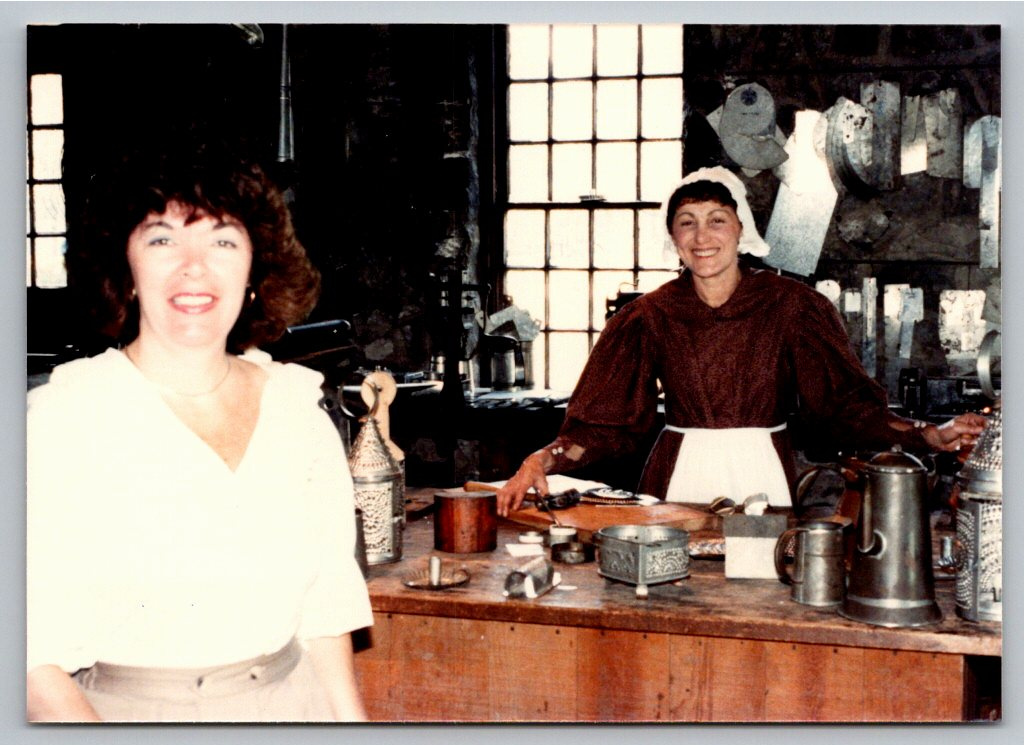
This vintage photograph captures the unique juxtaposition inherent to living history programs in the 1980s. In the foreground, a modern visitor sporting the signature hairstyle and casual fashion of the decade poses alongside the workshop. Behind the wooden workbench stands an artisan dressed in meticulous historic costume, complete with a period-appropriate bonnet, long-sleeved gown, and white apron.
The background of the shot reveals a treasure trove of authentic trade details. The heavy timber workbench is scattered with active hand tools and freshly crafted tinware, including tall coffeepots and punched-metal lanterns. Suspended on the stone wall behind the workbench are various metal patterns, templates, and specialized shaping tools hanging ready for use. Multi-pane window sashes allow natural light to fill the workshop, echoing the working conditions of early craftspeople.
Collector Value and Historical Significance
For collectors of vintage photography, trade history ephemera, and museum movement memorabilia, candid snapshots like this offer immense historical value. Beyond documenting the physical layout of historic trades, they record the evolution of public history interpretation itself. This image serves as a nostalgic testament to the educational programs that reintroduced generations of Americans to traditional handcrafts, ensuring that the legacy of early metalworking skills endured into the modern age.