1980s Vintage Photo Antique Tube Radio Console Display
📸 Click any thumbnail to inspect Front, Back & Angles (2 Photos)
As an eBay Partner, we may earn a commission if you make a purchase.
Item Specifications
- Era: 1980s
- Subject: Antique Tube Radio Consoles
- Setting: Museum Exhibition
- Item Type: Vintage Snapshot Photo
- Originality: Original Print
- Condition: Pre-Owned Vintage
- Category: Vintage Photography
- Format / Type: Snapshots
Looking for Modern Alternatives?
Explore top-rated, modern Vintage Photography and related historical accessories on Amazon.
Shop Vintage Photography on Amazon →As an Amazon Associate, we earn from qualifying purchases.
Historical Context & Overview
Preserving Audio Heritage: A 1980s Lens on Golden Age Radios
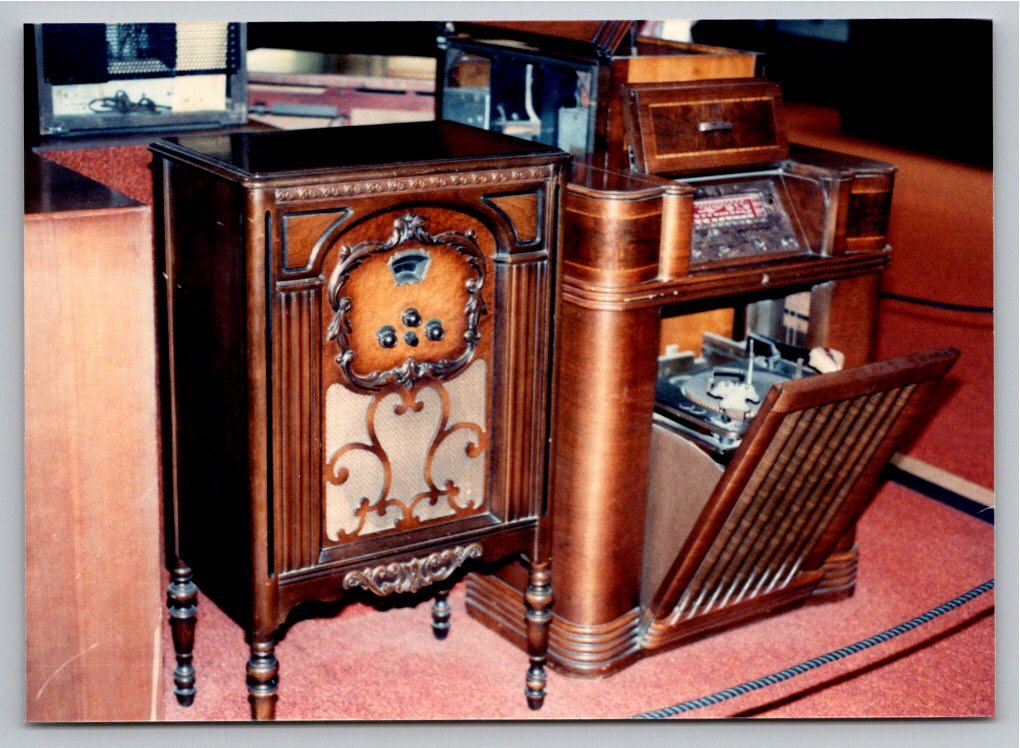
This original 1980s color photographic snapshot offers a fascinating look into the preservation of broadcast technology, capturing a curated museum display of extraordinary Golden Age radio consoles. Taken on vintage color photo paper, the image documents two stunning examples of early-to-mid 20th-century audio engineering, highlighted against the backdrop of an institutional museum space complete with plush burgundy carpets and protective stanchion ropes.
Ornate Cabinets and Vacuum Tube Engineering
The left console showcased in the snapshot represents the peak of late 1920s to early 1930s furniture styling—often referred to by collectors as a highboy console. Featuring intricately carved fretwork across the woven speaker grille, elegant turned spindled legs, and rich walnut-grain veneers, this unit functioned not merely as a domestic entertainment hub but as an architectural center-piece in the American living room. Beneath its decorative hood rested complex multi-tube chassis that brought live big-band broadcasts, dramatic serials, and vital news into thousands of homes during a transformative era in media history.
Positioned alongside it is an impressive late 1930s streamline modern or early Art Deco radio-phonograph combination console. This advanced unit features an open lower tilt-out drawer revealing an early automatic turntable mechanism, along with a top-mounted radio tuning dial equipped with mechanical station-preset buttons. The inclusion of an integrated record changer signaled a major transition in home sound reproduction, allowing listeners to alternate seamlessly between live shortwave broadcasts and recorded shellac 78 RPM records.
The juxtaposition of these two distinctive cabinet designs illustrates the rapid evolution of radio manufacturing across two pivotal decades. As consumer tastes shifted from the heavy, cathedral-influenced woodwork of the late 1920s toward the functional, streamlined console furniture of the late 1930s, audio manufacturers continuously adapted cabinet geometry to house larger electrodynamic speakers and expanded receiver chassis. Observing both styles side-by-side inside a museum setting emphasizes the remarkable pace of early home electronic innovation.
The 1980s Collector and Museum Movement
During the 1980s, appreciation for early wireless technology experienced a substantial resurgence. Dedicated antique radio clubs, regional technology museums, and private archives expanded significantly as historians recognized the urgency of safeguarding vacuum-tube-era electronics before they were lost to time. Vintage snapshots like this one—taken by visitors or curators using 35mm film cameras—provide vital documentation of historical exhibits and preservation efforts during this golden era of antique audio collecting.
Significance for Audio Historians and Ephemera Collectors
Beyond its visual charm, this candid color print serves as a valuable visual document for vintage audio restorers, radio history enthusiasts, and collectors of mid-century paper ephemera. It captures unique cabinet details, mechanical layout configurations, and museum curation practices from four decades ago. Whether consulted as reference material for radio cabinet restoration or retained as a nostalgic piece of broadcast history, this vintage snapshot remains an engaging bridge between 1980s photographic history and the pioneering days of wireless home entertainment.