Vintage 1939 Mercury V-8 Sedan Original Black & White Snapshot
📸 Click any thumbnail to inspect Front, Back & Angles (2 Photos)
As an eBay Partner, we may earn a commission if you make a purchase.
Item Specifications
- Era: 1930s
- Subject: 1939 Mercury V-8 Sedan
- Medium: Black & White Print
- Inscriptions: Handwritten Note on Reverse
- Features: Streamline Automobile Design
- Originality: Original
- Category: Vintage Photography
- Format / Type: Snapshots
Looking for Modern Alternatives?
Explore top-rated, modern Vintage Photography and related historical accessories on Amazon.
Shop Vintage Photography on Amazon →As an Amazon Associate, we earn from qualifying purchases.
Historical Context & Overview
The Debut of Edsel Ford's Vision: The 1939 Mercury Eight
In the late 1930s, Edsel Ford identified a critical gap in the American automotive market. Ford Motor Company offered affordable everyday transportation with their standard V-8 models, while Lincoln catered to the elite luxury market. To bridge this divide, Edsel spearheaded the creation of the Mercury brand, launching its very first production line for the 1939 model year. The 1939 Mercury Eight V-8 was born—a sophisticated, medium-priced automobile that delivered streamlined luxury, enhanced roominess, and modern performance to middle-class America.
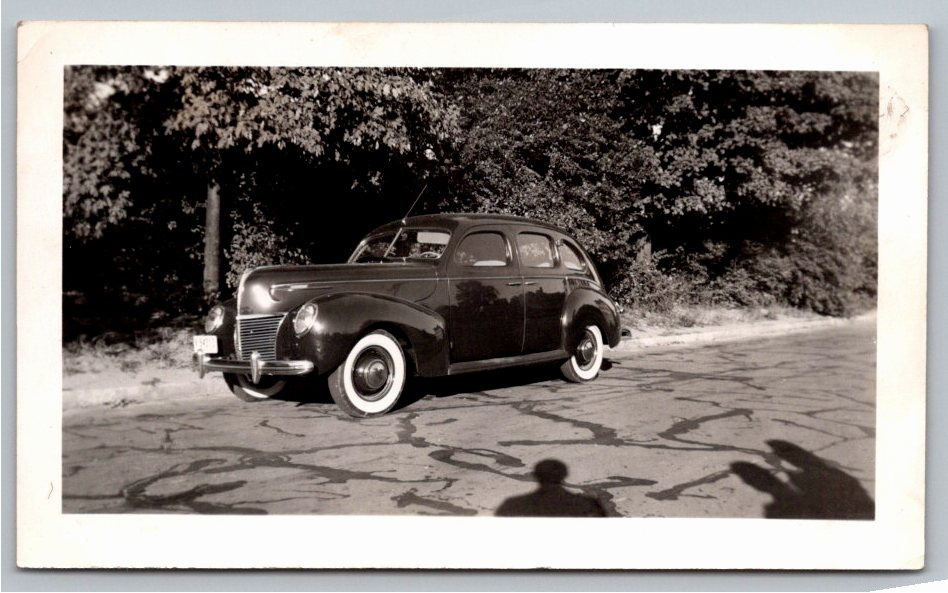
This original black-and-white snapshot captures a proud owner's brand-new 1939 Mercury V-8 four-door sedan parked along a tree-lined curb. Preserved on silver gelatin photographic paper, the image beautifully highlights the automobile's distinctive Streamline Moderne aesthetic, complete with gleaming whitewall tires, rounded teardrop fenders, elegant chrome grille bars, and flowing bodylines that captured the progressive spirits of pre-WWII industrial design.
Automotive Engineering on the Eve of World War II
Under the hood of the 1939 Mercury was an upgraded 239 cubic-inch Flathead V-8 engine that generated 95 horsepower, outpacing standard Fords of the era. Built on a generous 116-inch wheelbase, the Mercury Eight offered superior ride stability and exceptional interior volume. Its stylized horizontal grille, integrated headlamps, and sleek split windshield reflected the influence of aerodynamic principles that were sweeping across industrial manufacturing in the late 1930s.
Because American automotive manufacturing pivoted entirely to military production shortly after the outbreak of World War II, 1939 remains a landmark year in automotive collecting. Early Mercury models from this inaugural production run are lauded by historians as pivotal monuments to Ford's mid-century expansion.
Vernacular Photography: Capturing Pride of Ownership
What makes vintage snapshots particularly compelling to curators and social historians is their intimate, unscripted context. On the reverse side of this photograph, a crisp vintage inscription in pencil reads, "My new car / 1939 Mercury V-8." This simple personal note transforms a generic automobile photo into a poignant historical document of personal pride and economic milestone.
In the foreground of the snapshot, the cast shadows of the photographer and an accompanying onlooker fall across the cracked asphalt road. These shadowy silhouettes offer a fascinating human element, linking the viewer directly across decades to the exact moment a proud motorist pointed their camera at a prized new family possession in 1939.
Preserving Early Automotive Ephemera
For collectors of automobilia, photography, and mid-century Americana, original vernacular prints provide an authentic glimpse into everyday American life. Unlike mass-produced commercial advertising catalog images, candid street photographs showcase historical vehicles in real-world settings with contemporary lighting, original accessories, and authentic period backdrops. This pristine 1939 photograph remains a valuable artifact celebrating both American car culture and personal photographic history.