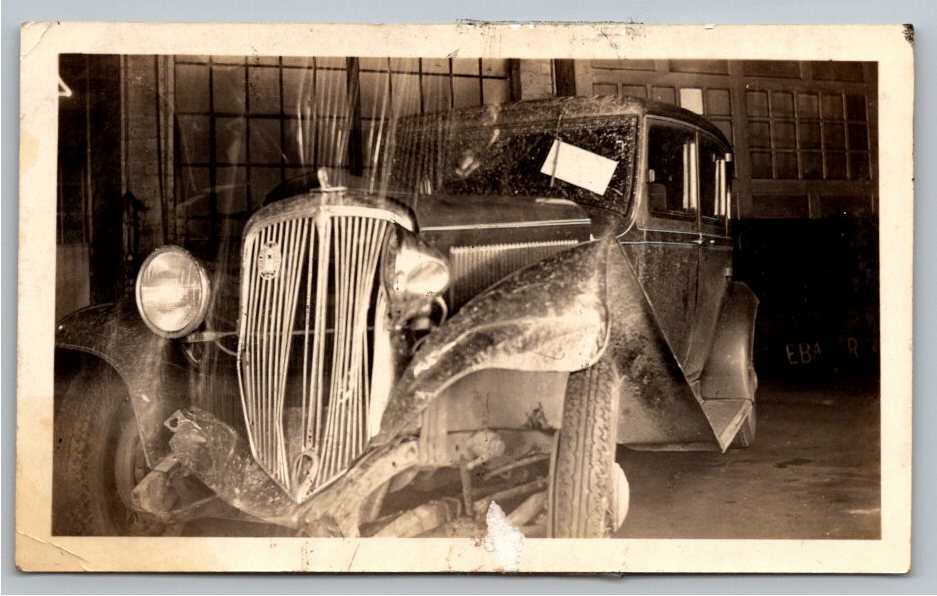
1933 Studebaker Auto Wreck Garage Photo: Vintage B&W Snapshot
📸 Click any thumbnail to inspect Front, Back & Angles (2 Photos)
As an eBay Partner, we may earn a commission if you make a purchase.
Item Specifications
- Era: 1930s (circa 1933)
- Subject: 1933 Studebaker Sedan Automobile Wreck
- Setting: Auto Repair Shop Garage
- Dimensions: Standard Vintage Snapshot
- Originality: Original Period Photograph
- Theme: Automobilia & Early Traffic History
- Category: Vintage Photography
- Format / Type: Snapshots
Looking for Modern Alternatives?
Explore top-rated, modern Vintage Photography and related historical accessories on Amazon.
Shop Vintage Photography on Amazon →As an Amazon Associate, we earn from qualifying purchases.
Historical Context & Overview
Unveiling a Moment in Automotive History: The 1933 Studebaker Wreck
Vernacular photography offers an unfiltered lens into the raw reality of American life during the early twentieth century. This captivating black-and-white snapshot preserves a dramatic moment from 1933: a heavily damaged Studebaker sedan sitting inside a service garage, awaiting assessment or salvage. Capturing the immediate aftermath of a severe collision, the photograph stands as a haunting piece of automotive history and Depression-era material culture.
Anatomy of an Impact: Visual Evidence and Vehicle Features
The visual details frozen within this silver gelatin print tell a vivid story. Prominently featured is the unmistakable V-contoured grille and streamlined front fascia distinctive to Studebaker's 1933 lineup—a model year celebrated for blending classic proportions with emerging Art Deco aerodynamic styling. The collision was clearly substantial: the driver-side fender is severely crumpled back toward the cabin, the steering linkage and front axle are displaced, and the left headlamp housing hangs crushed.
A careful examination reveals a white paper tag tucked beneath the windshield wiper blade, likely a garage job ticket, insurance valuation slip, or tow manifest. Visible through the fractured windshield, the interior remains shadowed, reflecting the grim reality of motoring during an era before safety glass became universally standardized across all trim levels and long before modern restraint systems existed.
Studebaker in 1933: Innovation Amid Corporate Turmoil
The year 1933 was a pivotal turning point for the Studebaker Corporation of South Bend, Indiana. Under the severe financial strain of the Great Depression, the storied company entered receivership in March 1933, leading to the tragic departure of long-time president Albert R. Erskine. Despite corporate distress, Studebaker produced some of its most visually striking automobiles during this period, including the Commander and Dictator series featuring advanced styling and robust engineering.
Vehicles of this era relied heavily on heavy-gauge steel fenders mounted over stout steel frame rails. As seen in the photograph, while the front left suspension absorbed immense impact energy, the passenger cabin sustained minimal distortion—a testament to the ongoing industry transition toward all-metal body structural safety in early 1930s auto manufacturing.
A Rare Artifact for Automobilia and Snapshot Collectors
Original auto crash photography from the interwar period occupies a compelling intersection between automobilia, insurance history, and vintage snapshot aesthetics. Local repair shops, insurance investigators, and curious onlookers frequently documented vehicular accidents on small-format roll film. Preserved with a period handwritten identification on the reverse, this photograph serves as an authentic document of early American motoring hazards, making it an exceptional addition to any serious transportation archive or vernacular photo collection.