1930s Mukden Shenyang Streetcar & Ancient City Wall Vintage
📸 Click any thumbnail to inspect Front, Back & Angles (2 Photos)
As an eBay Partner, we may earn a commission if you make a purchase.
Item Specifications
- Era: 1930s
- Location: Shenyang (Mukden), China
- Historical Period: Manchukuo Era
- Subject: Electric Tram & Ancient City Wall
- Print Type: Color Tinted Photomechanical
- Originality: Original Vintage
- Category: Postcards & Ephemera
- Format / Type: Vintage Postcards
Looking for Modern Alternatives?
Explore top-rated, modern Postcards & Ephemera and related historical accessories on Amazon.
Shop Postcards & Ephemera on Amazon →As an Amazon Associate, we earn from qualifying purchases.
Historical Context & Overview
Visual Convergence: Modern Transit Meets Ancient Qing Fortress
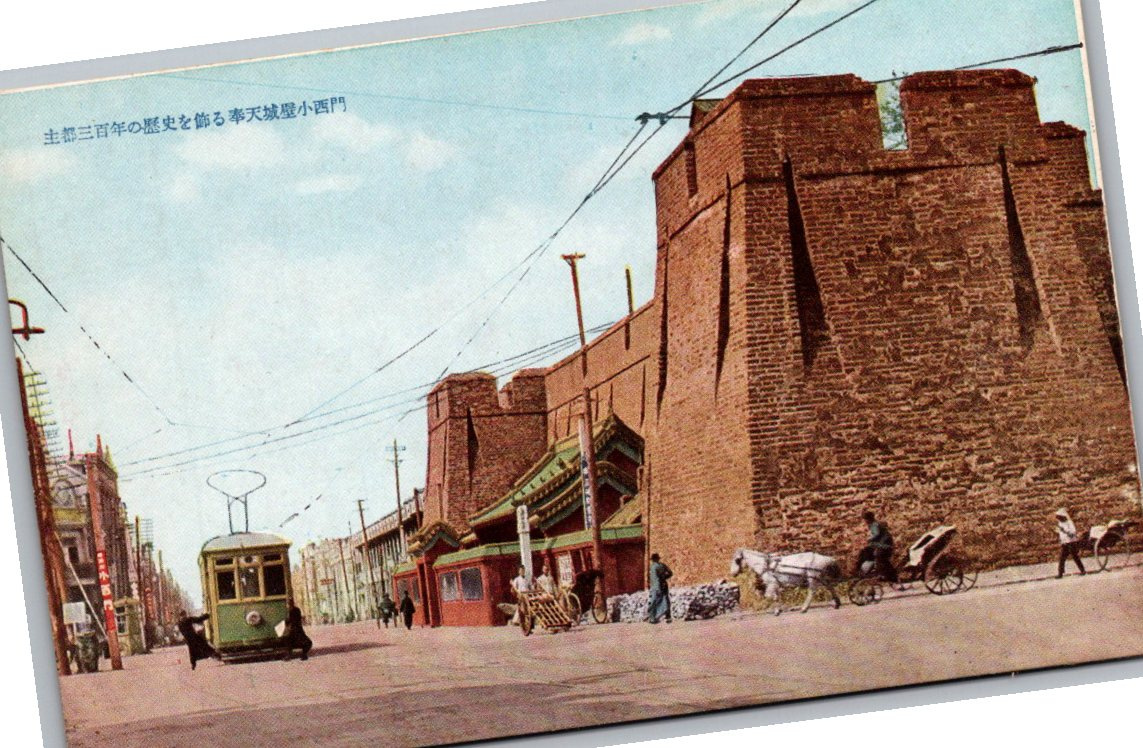
This evocative 1930s hand-colored photo postcard captures a defining architectural moment in the history of Mukden (now Shenyang, Liaoning Province). Framing the right side of the composition is the formidable red-brick masonry of the historic Xiaoximen—the Small West Gate—belonging to Mukden’s inner city wall. Originally constructed during the early Qing Dynasty, these imposing battlements symbolized three centuries of imperial authority and regional administrative defense. In stark visual contrast, a bright green electric streetcar glides along the paved thoroughfare, its overhead pantograph drawing power from crisscrossing utility lines overhead.
The Transformation of Fengtian in the Manchukuo Era
During the 1930s, under Japanese occupation and the establishment of the puppet state of Manchukuo, Mukden (frequently referred to as Fengtian or Hoten in official documentation) underwent rapid industrialization and urban remodeling. The city became a crucial node along the South Manchuria Railway, prompting widespread municipal infrastructure projects. The introduction of modern electric tramways reshaped daily commerce and civilian transport, bringing mechanical speed into spaces long dominated by pedestrian traffic and traditional transport. Look closely at the street level to observe a fascinating spectrum of mid-century mobility: an electric streetcar operating alongside a horse-drawn cart and a traditional rickshaw, revealing a cityscape suspended between imperial traditions and modern industrial ambition.
Archival Details and Collector Value
The top left corner features printed Japanese typography reading "古都三百年の歴史を飾る奉天城壁小西門," which translates to "The Small West Gate of the Fengtian City Wall, Adorning 300 Years of History as an Ancient Capital." The color tinting process endows the scene with rich, warm tones, emphasizing the deep ochre of the masonry and the vibrant jade hue of the trolley body. The reverse side features a crisp "Carte Postale" layout complete with a Japanese postal imprint reading "郵便はがき" (Yūbin Hagaki), remaining unposted and well-preserved.
For historians of East Asian urban development, vintage postcard collectors, and specialists in 1930s transport history, this postcard serves as an important visual document. Because large portions of Mukden's historic defensive walls were dismantled during mid-20th-century municipal expansions, rare contemporary photographs like this postcard preserve the lost architectural heritage of northeast China.