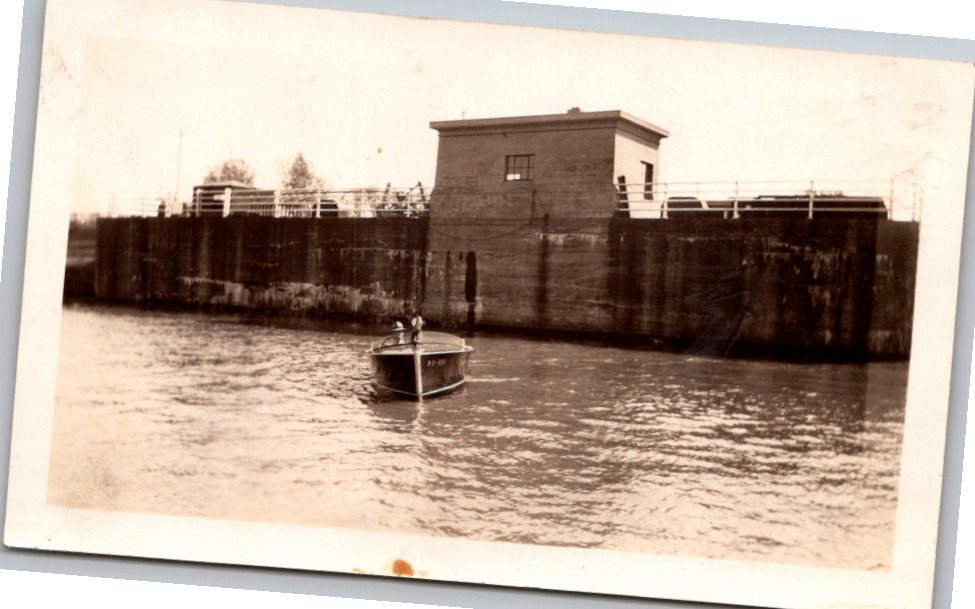
1930s Vintage Speedboat at Canal Lock Original Snapshot Photo
📸 Click any thumbnail to inspect Front, Back & Angles (2 Photos)
As an eBay Partner, we may earn a commission if you make a purchase.
Item Specifications
- Era: 1930s
- Medium: Black & White Snapshot Photo
- Subject: Speedboat & Canal Lock
- Location: Buffalo Region, New York
- Provenance: Estate of George S. Garner & Beatrice M. Fahey
- Originality: Original Vintage Print
- Category: Vintage Photography
- Format / Type: Snapshots
Looking for Modern Alternatives?
Explore top-rated, modern Vintage Photography and related historical accessories on Amazon.
Shop Vintage Photography on Amazon →As an Amazon Associate, we earn from qualifying purchases.
Historical Context & Overview
Navigating the Golden Age of Recreation on Inland Waterways
During the interwar era of the 1930s, American recreational boating underwent a dynamic transformation. As classic wooden motorboat manufacturers such as Chris-Craft, Gar Wood, and Hacker-Craft refined sleek mahogany runabouts equipped with powerful inboard engines, speedboats evolved into iconic symbols of mid-century leisure. This original black-and-white snapshot captures a pristine vintage motorboat idling within the quiet confines of a concrete canal lock chamber, offering a captivating window into the golden age of freshwater cruising.
Inland waterway networks—most notably the New York State Barge Canal system, which modernized the historic Erie Canal path—served as vital corridors during this decade. While built primarily to facilitate industrial freight transport between the Great Lakes and the Atlantic seaboard, these regulated channels quickly became favorite highways for adventurous pleasure boaters exploring regional lakes, rivers, and interconnected waterways across Upstate New York and beyond.
Civil Engineering and Maritime Precision
The compelling background of the photo features a massive poured-concrete lock wall topped with an elevated lockkeeper's control cabin and protective guardrails. Constructed during the early 20th-century expansion of American public works, these civil engineering structures were designed to safely adjust water levels, raising or lowering vessels between varying body elevations. The calm, glassy surface of the water within the chamber underlines the quiet moment of pause required while waiting for the lock gates to operate.
The boat depicted displays classic 1930s design elements, including a low-slung hull trim, polished deck fittings, and distinct bow registration markings. For the passengers aboard, passing through a lock was both a necessary navigational procedure and a brief social pause, bringing recreational captains into direct contact with municipal lockmasters and curious spectators lining the upper walkway above.
Vernacular Photography and Regional Heritage
As an authentic piece of vernacular photography, this candid snapshot delivers an unvarnished historical record that formal magazine advertisements simply could not replicate. It captures genuine mid-century lifestyle details: the natural light resting on the water, the weathered texture of the lock facade, and the subtle aesthetic of early motorboat construction.
Hailing from the estate of George Steve Garner (1911–1985) and Beatrice Mary Fahey (1914–1998) of Buffalo, New York, this print carries significant regional context. Western New York served as the historic epicenter of American canal navigation, serving as the western terminus of the Erie Canal along Lake Erie and the Niagara River. For marine historians, transportation enthusiasts, and collectors of vintage photography, this original snapshot remains a remarkably preserved fragment of maritime heritage.